- Tel: 858.663.9055
 Email: info@nsjbio.com
- Tel: 858.663.9055
- Email: info@nsjbio.com
Email: info@nsjbio.com
IgD antibody detection is important for studying B cell development and early immune system function. Immunoglobulin D (IgD) is a less abundant antibody class primarily expressed on the surface of naive B cells, where it functions as part of the B cell receptor complex. Accurate detection of IgD enables analysis of B cell maturation, immune regulation, and antibody expression patterns.
IgD Antibody for ELISA applications enables sensitive and selective detection of immunoglobulin D in serum, plasma, and experimental systems. These antibodies are commonly used in immunology research and immune profiling studies where characterization of B cell populations and early immune responses is required.
IgD is structurally similar to IgG but is present at much lower levels in circulation. It is primarily membrane-bound on naive B cells, where it contributes to antigen recognition and signaling during early stages of immune activation.
Functionally, IgD plays a role in B cell activation, differentiation, and immune surveillance. Although its full biological role is less well defined compared to other immunoglobulin classes, IgD is recognized as an important marker of early-stage B cell development and immune system regulation.
IgD Antibody for ELISA systems are optimized for sensitive detection of immunoglobulin D in biological samples. These assays support:
Because IgD is present at low levels, sensitive detection methods are important for accurate measurement and interpretation of results.
IgD antibodies are widely used in:
IgD detection provides insight into B cell maturation and immune system dynamics, particularly in early stages of immune response development.
IgD antibodies provide useful tools for studying B cell development and early immune system function. Their ability to detect immunoglobulin D supports research into immune regulation, antibody expression, and lymphocyte biology.
Explore our immunoglobulin antibody collection to find IgG, IgA, IgM, IgE, and IgD antibodies optimized for ELISA-based detection and immunological research.
Researchers studying B-cell immunoglobulin biology, adaptive immune signaling pathways, and ELISA based antibody detection assays may also be interested in our Immunology Antibodies landing page featuring cytokines, immune markers, and host defense related proteins.
Browse the complete collection of research antibodies on our Antibodies landing page.

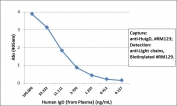
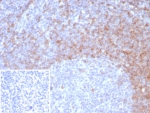
Human IgD Antibody for ELISA Subclass Specificity Analysis. ELISA analysis of human immunoglobulins demonstrates that clone RM123 selectively recognizes Human IgD / IGHD, with strong signal observed for IgD derived from human plasma and IgD kappa from human myeloma samples across tested concentrations. No cross-reactivity is detected with other immunoglobulin classes including IgG, IgM, IgA, or IgE.




 Powered by Bioz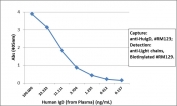



 info@nsjbio.com