- Tel: 858.663.9055
 Email: info@nsjbio.com
- Tel: 858.663.9055
- Email: info@nsjbio.com
Email: info@nsjbio.com
IgA antibody detection plays a central role in studying mucosal immunity and immune responses at epithelial surfaces. Immunoglobulin alpha (IgA) is the dominant antibody class in secretions such as saliva, respiratory fluids, and gastrointestinal secretions, where it provides a first line of defense against pathogens. In addition to its role at mucosal barriers, IgA is also present in circulation and contributes to systemic immune responses.
IgA Antibody for ELISA applications enables accurate quantification of immunoglobulin alpha in serum, plasma, and mucosal samples. These antibodies are widely used in immunology research, infection studies, microbiome analysis, and antibody production workflows where detection of IgA is required.
IgA is structurally distinct from other immunoglobulin classes and is commonly found in both monomeric and dimeric forms. Secretory IgA, the dominant form at mucosal surfaces, is associated with a joining chain and secretory component that enables transport across epithelial cells and protects against proteolytic degradation.
Functionally, IgA plays a key role in immune exclusion by preventing pathogen adherence and neutralizing antigens without triggering excessive inflammation. This makes IgA essential for maintaining immune homeostasis at barrier sites while limiting tissue damage.
IgA Antibody for ELISA systems are optimized for sensitive and specific detection of immunoglobulin alpha in complex biological samples. These assays support:
Accurate detection of IgA is particularly important due to its variable abundance and presence in multiple structural forms, requiring antibodies with strong specificity and reliable performance in ELISA-based workflows.
IgA exists as two subclasses, IgA1 and IgA2, which differ in structure, distribution, and biological function.
IgA1 is predominantly found in circulation and is associated with systemic immune responses. Its extended hinge region provides flexibility for antigen binding but also increases susceptibility to proteolytic cleavage.
IgA2 is enriched at mucosal surfaces and is structurally adapted for resistance to bacterial proteases, allowing it to function effectively in microbial-rich environments such as the gastrointestinal tract.
While total IgA antibodies measure overall immunoglobulin alpha levels, subclass-specific antibodies enable more precise differentiation of systemic versus mucosal immune responses.
IgA antibodies are widely used in:
Because IgA plays a critical role in immune defense at epithelial surfaces, its detection provides important insight into immune status, pathogen exposure, and immune regulation.
IgA antibodies are essential tools for studying immune responses at mucosal and systemic levels. From total IgA quantification to subclass-specific analysis, these antibodies support a wide range of ELISA-based applications in immunology, microbiology, and disease research.
Explore our immunoglobulin antibody collection to find IgA, IgA1, and IgA2 antibodies optimized for ELISA detection and quantitative immunoassays.
Researchers studying humoral immune responses, immunoglobulin detection systems, and ELISA based assay development may also be interested in our Immunology Antibodies landing page featuring cytokines, immune markers, and host defense related proteins.
Browse the complete collection of research antibodies on our Antibodies landing page.
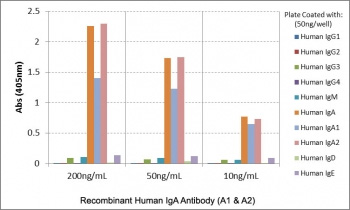
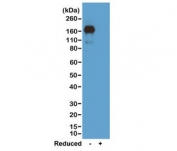
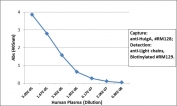
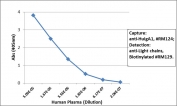
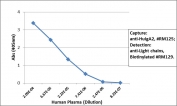
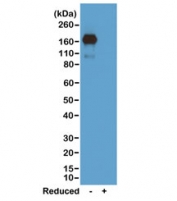
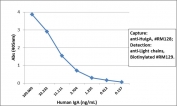
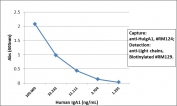
Human IgA Antibody for ELISA Subclass Specificity Analysis. ELISA analysis of human immunoglobulins demonstrates that clone RM128 selectively recognizes Human IgA / IGHA, with strong signal observed for both IgA1 and IgA2 across tested concentrations, indicating binding to the shared alpha heavy chain.



 Citations (6)
 Powered by Bioz



 info@nsjbio.com