- Tel: 858.663.9055
 Email: info@nsjbio.com
- Tel: 858.663.9055
- Email: info@nsjbio.com
Email: info@nsjbio.com
Signal transduction pathways regulate how cells respond to environmental cues, growth factors, cytokines, stress signals, immune activation, and metabolic changes. Signal Transduction Antibodies are widely used to investigate the molecular mechanisms controlling proliferation, differentiation, apoptosis, inflammation, transcriptional regulation, and cellular adaptation. These pathways integrate extracellular signals with downstream intracellular responses that ultimately alter gene expression, protein activity, and cellular behavior.
Cell signaling networks involve coordinated interactions between receptors, kinases, phosphatases, adaptor proteins, transcription factors, and chromatin-associated regulators. Major signaling systems include MAPK signaling, PI3K-AKT signaling, JAK-STAT pathways, NF-kappaB activation, TGF-beta signaling, WNT signaling, stress kinase signaling, and Fc receptor-mediated immune pathways. Dysregulation of these signaling cascades contributes to cancer progression, autoimmune disease, chronic inflammation, neurodegeneration, infectious disease responses, and resistance to targeted therapies.
Signal transduction proteins frequently undergo post-translational modifications such as phosphorylation, ubiquitination, cleavage, acetylation, or glycosylation that regulate pathway activity and intracellular localization. Because signaling pathways are highly dynamic, antibodies capable of detecting endogenous proteins, activated phosphoproteins, receptor complexes, and nuclear transcriptional regulators remain essential tools for mechanistic and translational research applications.
Protein kinases are among the most extensively studied signaling proteins because they function as central regulators of intracellular communication networks. MAP kinases, AKT family proteins, JAK kinases, cyclin-dependent kinases, and stress-responsive kinases coordinate responses to extracellular stimuli and regulate downstream transcriptional programs. Cell surface receptors including Fc receptors, growth factor receptors, cytokine receptors, and immune-associated receptors initiate signaling events that control inflammatory activation, immune-cell communication, and tissue-specific responses.
Fc gamma receptor family proteins such as CD16/FCGR3, CD32/FCGR2, CD64/FCGR1A, and FCGRT/FcRn additionally participate in antibody-mediated signaling and Fc-dependent immune regulation. These receptors influence antibody-dependent cellular cytotoxicity, immune complex recognition, IgG recycling, inflammatory signaling, and therapeutic antibody pharmacology. Antibodies targeting Fc receptor pathways are therefore widely used in immunology, oncology, translational medicine, and therapeutic antibody development research.
Nuclear signaling proteins and transcriptional regulators further integrate signaling cascades with chromatin-associated gene regulation. Proteins such as JAZF1 and additional transcription-associated signaling regulators contribute to metabolic signaling, developmental regulation, epigenetic control, and cancer-associated transcriptional reprogramming. Antibodies recognizing nuclear signaling proteins are commonly used in immunofluorescence, immunohistochemistry, and chromatin-associated pathway studies.
Aberrant signaling pathway activation is a hallmark of many human diseases, particularly cancer. Constitutive activation of kinase pathways, altered receptor signaling, and dysregulated transcription-factor activity contribute to uncontrolled proliferation, immune evasion, metabolic adaptation, and tumor progression. Signal Transduction Antibodies therefore play a major role in biomarker discovery, pathway profiling, tumor characterization, and evaluation of therapeutic responses.
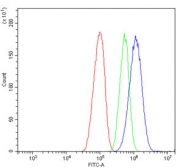
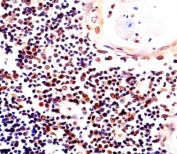
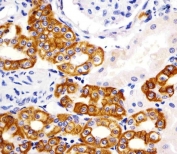
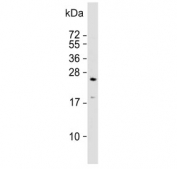
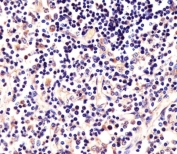
In immunology research, signaling antibodies are used to characterize leukocyte activation, Fc receptor biology, inflammatory responses, cytokine signaling, and immune-cell differentiation. Flow cytometry, immunohistochemistry, western blotting, and immunofluorescence applications help define signaling states and pathway activation patterns across diverse immune and tissue microenvironments.
Protein microarray specificity validation approaches such as HuProt analysis further support selective target recognition for signaling proteins and transcriptional regulators. High-specificity antibodies are particularly important in signal transduction research because many kinase families and transcription-factor families contain structurally related proteins with overlapping expression patterns.
Signal Transduction Antibodies are commonly used in western blotting, immunohistochemistry, immunofluorescence, flow cytometry, immunoprecipitation, and pathway activation studies. These applications support analysis of signaling pathway activation, receptor expression, protein localization, nuclear translocation, and disease-associated changes in signaling networks.
Common research areas include:
Examples of signaling-associated proteins represented within this collection include:
Signal transduction research continues to expand across oncology, immunology, neuroscience, metabolism, and therapeutic antibody development. As new signaling interactions and regulatory networks are identified, antibodies capable of selectively detecting receptors, kinases, transcriptional regulators, and pathway-associated proteins remain essential for understanding disease biology and cellular communication mechanisms. Signal Transduction Antibodies from NSJ Bioreagents support investigation of endogenous signaling proteins across a wide range of experimental models and research applications including western blotting, immunohistochemistry, immunofluorescence, flow cytometry, and protein microarray specificity validation studies.
A selection of Signal Transduction Antibody products is shown below to support a range of research applications.
These antibodies are part of a broader antibody panel offered by NSJ Bioreagents.
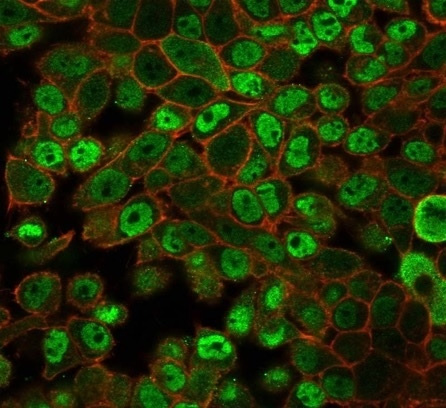
Signal Transduction Antibodies Immunofluorescence Analysis. Immunofluorescence staining of PFA-fixed human HeLa cells using JAZF1 Antibody / Transcriptional Regulation Protein (green, clone PCRP-JAZF1-1C2) together with phalloidin cytoskeletal stain (red). Prominent nuclear-associated fluorescence highlights JAZF1 expression consistent with its role as a zinc finger transcriptional regulator involved in chromatin-associated signaling, metabolic regulation, and nuclear gene-expression pathways.


 Powered by Bioz



 info@nsjbio.com