- Tel: 858.663.9055
 Email: info@nsjbio.com
- Tel: 858.663.9055
- Email: info@nsjbio.com
Email: info@nsjbio.com
Platelet antibodies are widely used to investigate platelet biology, hemostatic regulation, thrombus formation, and cardiovascular disease mechanisms. Platelets are specialized anucleate blood cells derived from megakaryocytes that play central roles in coagulation, vascular repair, and inflammatory signaling. In addition to their established functions in hemostasis, platelets actively participate in immune responses, endothelial interactions, angiogenesis, and tumor-associated processes.
Researchers utilize platelet antibodies to identify platelet populations, characterize activation states, and investigate signaling pathways that regulate platelet adhesion, aggregation, and thrombus formation. Common platelet markers include CD41 (ITGA2B), CD61 (ITGB3), CD42b (GP1BA), and other proteins involved in platelet receptor signaling and coagulation biology.
Platelets circulate throughout the vascular system and rapidly respond to endothelial injury. Upon activation, platelets undergo shape change, release granule contents, and form adhesive complexes that help initiate clot formation. These processes are regulated by numerous surface receptors, intracellular signaling molecules, and cytoskeletal proteins that coordinate platelet activation and aggregation.
Platelet antibodies support investigations into platelet receptor biology, intracellular signaling cascades, and cellular interactions that contribute to normal hemostasis and pathological thrombosis. Because platelet dysfunction contributes to bleeding disorders, cardiovascular disease, stroke, and thromboembolic events, platelet-associated proteins remain important targets in translational and clinical research.
Frequently studied platelet-associated proteins include:
These proteins help regulate platelet adhesion, activation, aggregation, granule release, and interactions with endothelial cells and circulating leukocytes.
Platelet activation is a central event in thrombosis and cardiovascular disease. Activated platelets interact with endothelial cells, coagulation factors, leukocytes, and inflammatory mediators to regulate vascular responses following injury. Excessive platelet activation contributes to myocardial infarction, ischemic stroke, peripheral vascular disease, and other thrombotic disorders.
Platelets also participate in inflammatory signaling networks and immune regulation. Platelet-leukocyte interactions influence innate immune responses, vascular inflammation, and tissue repair processes. As a result, platelet antibodies are increasingly used in studies examining the intersection of cardiovascular biology, inflammation, and immune signaling.
Platelet antibodies are valuable tools for:
The platelet antibody collection includes antibodies targeting platelet receptors, adhesion molecules, signaling proteins, and activation markers involved in hemostasis, thrombosis, and cardiovascular regulation. These reagents support investigations into platelet function, vascular biology, coagulation pathways, and disease-associated platelet activation mechanisms.
Researchers studying platelet activation, thrombotic signaling pathways, and vascular homeostasis mechanisms may also be interested in our Cardiovascular Antibodies landing page featuring endothelial markers, signaling mediators, and cardiovascular disease related targets.
Browse the complete collection of research antibodies on our Antibodies landing page.
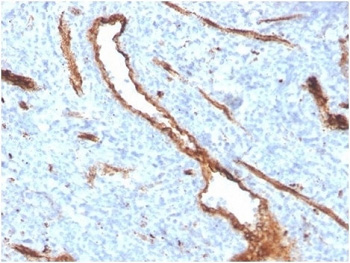
von Willebrand Factor Antibody Bone Marrow Vasculature IHC. Immunohistochemistry analysis of human bone marrow tissue using von Willebrand Factor Antibody clone VWF/4384R demonstrates strong HRP-DAB brown staining of endothelial cells lining sinusoidal vascular channels throughout the marrow microenvironment. The staining pattern highlights an extensive network of branching blood vessels and sinusoidal structures, consistent with the established endothelial localization of von Willebrand factor (VWF), a key mediator of platelet adhesion, vascular integrity, and hemostatic regulation. This image illustrates the close relationship between vascular endothelium and platelet biology within hematopoietic tissue. HIER: boil tissue sections in pH 9 10mM Tris with 1mM EDTA for 20 min and allow to cool before testing.
| ||

|


 Powered by Bioz

 Citations (10)

 info@nsjbio.com