- Tel: 858.663.9055
 Email: info@nsjbio.com
- Tel: 858.663.9055
- Email: info@nsjbio.com
Email: info@nsjbio.com
Receptor tyrosine-protein kinase erbB-2 (ERBB2), commonly known as HER2 or HER2/neu, is a transmembrane receptor tyrosine kinase belonging to the epidermal growth factor receptor family, which also includes EGFR (ERBB1), ERBB3, and ERBB4. HER2 plays a central role in regulating cell proliferation, survival, and differentiation through activation of signaling pathways such as PI3K-AKT and MAPK. HER2 antibody reagents are widely used to detect ERBB2 expression in epithelial tissues and tumors, where dysregulation and overexpression are associated with aggressive disease phenotypes.
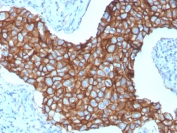
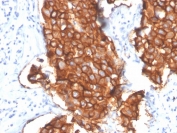
In normal tissues, HER2 expression is typically low and restricted to select epithelial compartments, whereas tumor cells may exhibit increased expression and distinct membranous staining patterns. This differential expression makes HER2 a critical tumor marker in cancer research, particularly in studies of breast, gastric, and other epithelial malignancies. HER2 antibodies for immunohistochemistry provide a reliable approach for visualizing receptor distribution in tissue sections.
HER2 antibodies are used across multiple research applications to evaluate ERBB2 expression and function. In immunohistochemistry, HER2 antibodies enable visualization of receptor localization in formalin-fixed, paraffin-embedded tissues, where membranous staining patterns provide insight into receptor overexpression and tumor cell distribution.
Beyond tissue-based analysis, HER2 antibodies are also used in immunodetection assays such as western blot and ELISA to assess protein expression levels and signaling activity.
These complementary approaches support both qualitative and quantitative analysis of HER2 across different experimental systems.
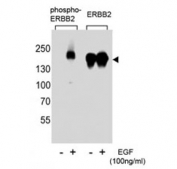
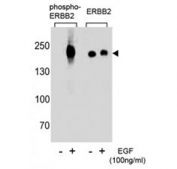
For studies focused on receptor signaling and pathway activation, phospho-specific antibodies can be used alongside total HER2 detection. The Phospho-ErbB2 (pY1248) antibody provides a well-established readout of receptor activation, while additional sites such as pY1221 and pY1222 can be used to evaluate signaling dynamics and pathway propagation.
HER2 Expression in Normal and Cancer Tissues
HER2 expression follows distinct patterns depending on tissue context. In normal epithelial tissues, expression is generally low, with limited membranous localization. In contrast, tumor tissues may exhibit strong and circumferential membranous staining, reflecting receptor overexpression and altered signaling activity characteristic of epithelial-derived cancers such as those identified using cytokeratin antibodies.
HER2 overexpression is most commonly associated with subsets of breast and gastric carcinomas, where it contributes to tumor progression and cellular proliferation. HER2 is frequently evaluated alongside other tumor markers such as estrogen receptor (ER), progesterone receptor (PR), and proliferation markers including Ki67 to better understand tumor biology and classification.
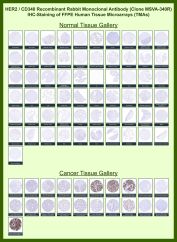
Tissue microarray (TMA) analysis enables large-scale evaluation of HER2 expression across diverse normal and cancer tissues under standardized experimental conditions. HER2 antibodies applied to TMA panels allow direct comparison of staining intensity and distribution across hundreds of tissue cores.
In TMA-based studies, HER2-positive tumors demonstrate strong membranous staining, while normal tissues typically show minimal signal, reinforcing the specificity of HER2 as a tumor-associated marker.
A range of HER2 antibody reagents are available to support different research applications, including immunohistochemistry and other immunodetection assays. These antibodies enable reliable detection of ERBB2 expression across a variety of sample types and experimental formats.
Researchers studying receptor tyrosine kinase signaling, epithelial tumor progression, and oncogenic growth factor pathways may also be interested in our Cancer Antibodies landing page featuring tumor biomarkers, signaling mediators, and oncology related targets.
A selection of HER2 antibody products is shown below to support a range of research applications.
These ERBB2 antibodies are part of a broader antibody panel offered by NSJ Bioreagents.
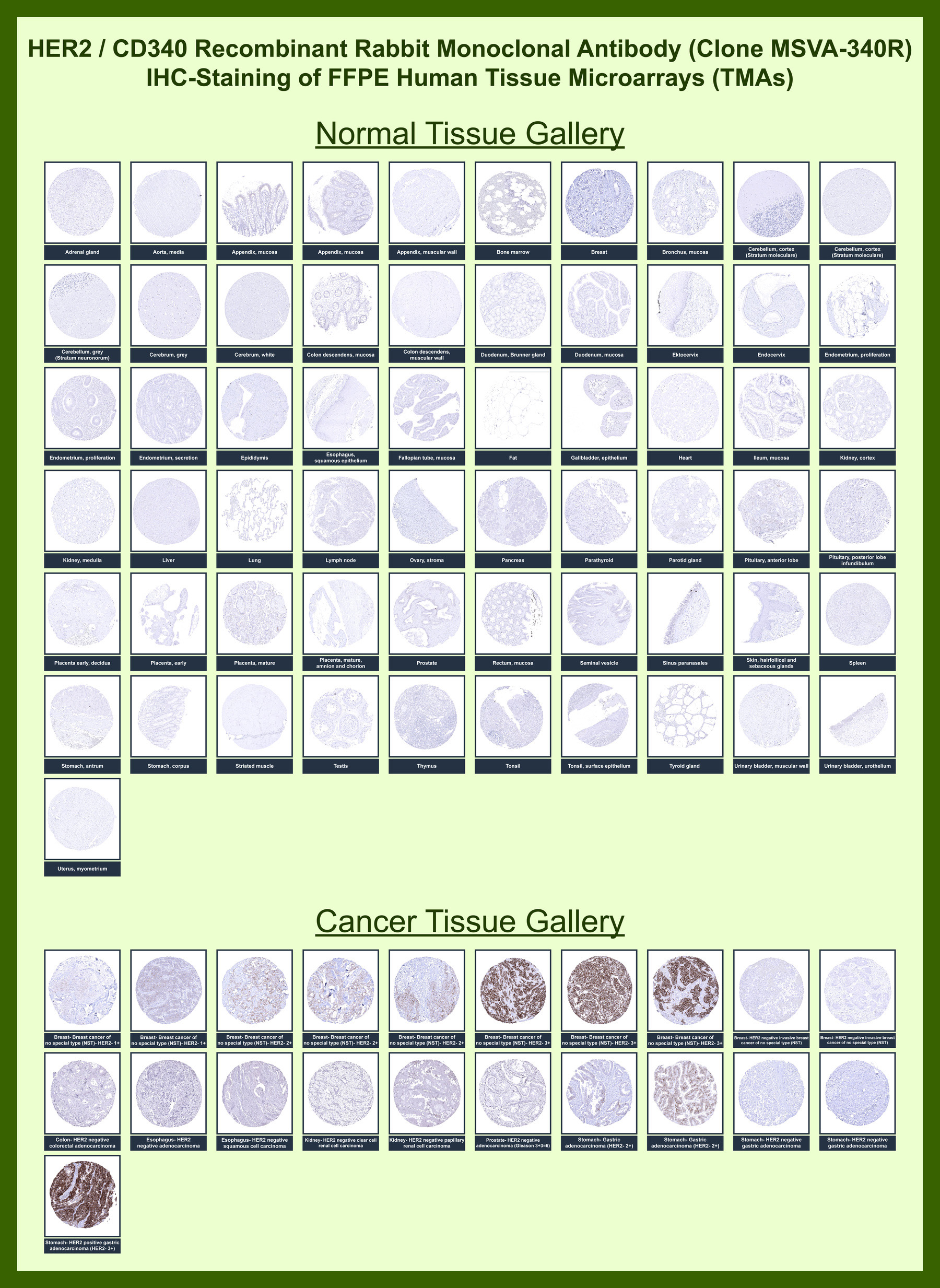
HER2 Antibody for IHC Tissue Microarray (TMA) Multi-Tissue Expression. Immunohistochemistry analysis of Receptor tyrosine-protein kinase erbB-2 (ERBB2) expression in FFPE human tissue microarray (TMA) sections using HER2 Antibody for IHC clone MSVA-340R demonstrates minimal to absent HRP-DAB brown staining across most normal tissues, with only weak membranous signal in select epithelial compartments. In cancer tissue microarrays, variable to strong circumferential membranous staining is observed in tumor epithelial cells, most prominently in subsets of breast and gastric carcinoma cores, consistent with HER2 overexpression. The clear contrast between HER2-positive tumor cells and largely negative surrounding tissues supports its role as a membrane-associated tumor marker in immunohistochemistry-based analysis. Heat-induced epitope retrieval was performed prior to staining to ensure optimal antigen detection in FFPE sections.



 Powered by Bioz





 info@nsjbio.com