- Tel: 858.663.9055
 Email: info@nsjbio.com
- Tel: 858.663.9055
- Email: info@nsjbio.com
Email: info@nsjbio.com
EGFR Antibody products are widely used to study Epidermal Growth Factor Receptor (EGFR), also known as ERBB1 or HER1, a transmembrane receptor tyrosine kinase central to epithelial cell signaling and tumor biology. EGFR plays a key role in regulating proliferation, differentiation, and survival, making it one of the most extensively studied targets in cancer research.
EGFR is activated through ligand binding, leading to receptor dimerization and downstream signaling through pathways such as MAPK, PI3K-AKT, and JAK-STAT. Dysregulation of EGFR signaling is strongly associated with tumor progression, therapeutic resistance, and poor clinical outcomes across multiple cancer types, including lung, colorectal, and head and neck cancers.
Because of its importance, EGFR antibody reagents are frequently used to evaluate:
EGFR antibodies are commonly used in multiple research applications depending on experimental needs:
Different antibody clones and formats may be optimized for specific applications, allowing flexibility in experimental design.
EGFR is frequently overexpressed or mutated in cancer, contributing to increased proliferation, invasion, and resistance to apoptosis. Its strong membranous staining pattern in epithelial tumors makes it a widely used marker in immunohistochemical analysis. In addition to tumor cells, EGFR signaling influences interactions within the tumor microenvironment, including stromal and immune cell responses.
When selecting an EGFR antibody, researchers often consider:
Well-characterized clones, such as those with extensive publication support or microarray validation, provide increased confidence in experimental results.
A selection of EGFR antibody products is shown below. These include monoclonal and polyclonal antibodies validated for a range of research applications.
Researchers studying receptor tyrosine kinase signaling, epithelial tumor progression, and oncogenic growth factor pathways may also be interested in our Cancer Antibodies landing page featuring tumor biomarkers, signaling mediators, and cancer biology related targets.
These antibodies are part of a broader antibody panel offered by NSJ Bioreagents.
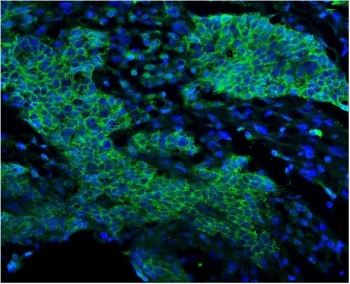
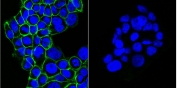
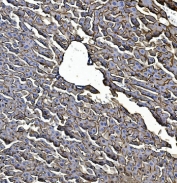
EGFR Antibody Lung Cancer IF. Immunofluorescence analysis of FFPE human lung cancer tissue stained with EGFR antibody detecting Epidermal growth factor receptor (green). Tumor epithelial cells show strong membranous staining outlining cell borders with additional cytoplasmic signal, consistent with receptor tyrosine kinase localization and active signaling in malignant tissue. The staining highlights dense tumor cell populations within the tumor microenvironment, while surrounding stromal regions show comparatively reduced signal. DAPI nuclear stain (blue) highlights nuclei. HIER: boil tissue sections in pH 8 EDTA for 20 min and allow to cool before testing.


 Citations (11)

 Powered by Bioz






 info@nsjbio.com