- Tel: 858.663.9055
 Email: info@nsjbio.com
- Tel: 858.663.9055
- Email: info@nsjbio.com
Email: info@nsjbio.com
Cadherin 1 (CDH1), also known as E-cadherin, is a calcium-dependent cell adhesion protein that plays a central role in epithelial tissue architecture and maintenance. CDH1 is localized to the cell membrane where it mediates homophilic cell-cell adhesion through adherens junctions, supporting tissue integrity and polarity. Loss or dysfunction of E-cadherin is strongly associated with epithelial-to-mesenchymal transition (EMT), tumor progression, and metastasis, making CDH1 antibody tools essential for cancer research and epithelial biology studies.
CDH1 antibody reagents are widely used to evaluate epithelial differentiation status, tumor classification, and changes in cell adhesion. E-cadherin expression is typically strong in normal epithelial tissues and reduced or absent in invasive carcinomas, particularly in diffuse gastric cancer and lobular breast carcinoma. This makes CDH1 antibody a critical marker in both diagnostic pathology and mechanistic studies of tumor progression.
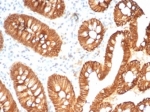
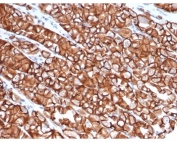
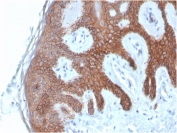
CDH1 antibody for IHC is one of the most widely used approaches for assessing epithelial cell adhesion and tumor differentiation in formalin-fixed, paraffin-embedded tissues. Immunohistochemical staining of E-cadherin typically shows strong membranous localization in epithelial cells, reflecting its role in adherens junctions.
In normal tissues, CDH1 antibody highlights organized epithelial layers with crisp cell membrane staining. In cancer tissues, loss, reduction, or cytoplasmic redistribution of staining can indicate disrupted adhesion and increased invasive potential. CDH1 IHC antibody staining is especially important in distinguishing ductal versus lobular breast carcinoma and in evaluating gastric cancer subtypes.
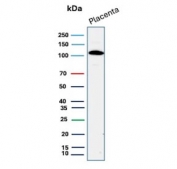
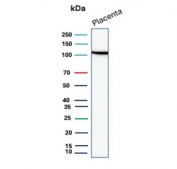
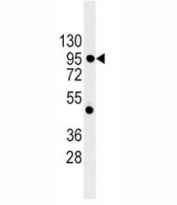
CDH1 antibody for western blot is used to detect E-cadherin protein expression levels and to study changes in protein stability, cleavage, or regulation. Western blot analysis typically identifies CDH1 as a band corresponding to the full-length membrane protein, with additional bands sometimes observed due to proteolytic processing or post-translational modification.
This application is particularly useful in EMT studies, where loss of E-cadherin expression is a hallmark event. CDH1 western blot antibody allows researchers to quantify protein downregulation and correlate it with transcriptional changes and signaling pathway activation
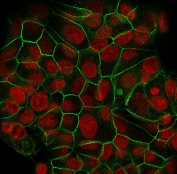
CDH1 antibody for IF enables high-resolution visualization of E-cadherin localization within cells. Immunofluorescence staining typically reveals distinct membrane-associated signal outlining cell-cell contacts in epithelial monolayers.
This application is valuable for studying cell polarity, junction assembly, and dynamic changes in adhesion during processes such as migration or EMT. CDH1 IF antibody is frequently used in co-localization studies with cytoskeletal or junctional proteins to better understand epithelial organization.
CDH1 antibody products support a wide range of experimental workflows focused on epithelial biology, cancer progression, and cell adhesion mechanisms. Because E-cadherin plays a central role in maintaining tissue structure, its detection provides insight into both normal physiology and disease states.
Researchers use CDH1 antibody reagents to:
CDH1 functions within a broader network of adhesion and signaling proteins. Related targets often studied alongside CDH1 antibody include:
These markers are frequently used together to characterize epithelial versus mesenchymal phenotypes.
CDH1 antibody remains a cornerstone tool for studying epithelial biology and cancer progression. Whether used for immunohistochemistry, western blot, or immunofluorescence, E-cadherin detection provides critical insight into cell adhesion, tissue integrity, and disease mechanisms. Selecting the appropriate CDH1 antibody for each application ensures accurate and reproducible results across experimental systems.
Researchers studying epithelial cell adhesion, adherens junction organization, and epithelial-mesenchymal transition pathways may also be interested in our Cell Biology Antibodies landing page featuring adhesion proteins, cytoskeletal regulators, and intracellular signaling related targets.
Researchers investigating epithelial differentiation, tumor progression, and immune microenvironment interactions may also be interested in our Immunology Antibodies landing page featuring cytokines, cell surface proteins, and inflammatory response related targets.
Browse the complete collection of research antibodies on our Antibodies landing page.

CDH1 Antibody for IHC in human tissue microarray (TMA). Immunohistochemistry analysis of Cadherin 1 / E-cadherin expression across normal and cancer tissue microarrays using recombinant rabbit monoclonal clone MSVA-035R, demonstrating membranous HRP-DAB brown staining in epithelial cells across a wide range of normal tissues, including gastrointestinal tract, skin, and glandular epithelia, with minimal staining in non-epithelial tissues. Cancer tissue microarrays show variable E-cadherin expression, with retained membranous staining in well-differentiated tumors and reduced or heterogeneous staining in poorly differentiated carcinomas. Signal highlights epithelial lineage specificity and differential expression patterns across normal and malignant tissues.


 Powered by Bioz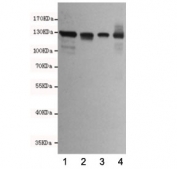







 info@nsjbio.com