- Tel: 858.663.9055
 Email: info@nsjbio.com
- Tel: 858.663.9055
- Email: info@nsjbio.com
Email: info@nsjbio.com
Immunohistochemistry (IHC) antibodies are widely used to detect protein expression within intact tissue architecture, enabling visualization of cellular localization, structural organization, and disease-associated changes. These antibodies are designed for use in formalin-fixed, paraffin-embedded samples and support analysis of protein distribution at the cellular and subcellular level. Epithelial targets such as the EpCAM Antibody for IHC are commonly used to identify carcinoma cells, while broader epithelial profiling can be explored through the cytokeratin antibody collection.
IHC antibodies used in FFPE tissues must perform reliably following antigen retrieval, which restores epitope accessibility after formalin fixation. Heat-induced epitope retrieval (HIER) methods using citrate or EDTA buffers are commonly applied to enhance staining intensity and consistency. Antibodies suitable for immunohistochemistry are selected based on their ability to generate strong, specific staining with minimal background under these conditions, supporting reproducible detection across different tissue types and workflows.
IHC antibodies enable identification of specific cell populations within complex tissues. Immune markers such as CD45 antibody are commonly used to identify leukocyte populations, while mesenchymal markers including vimentin antibody highlight stromal and connective tissue components. These markers complement epithelial targets and support comprehensive tissue characterization across diverse biological contexts.
Immunohistochemistry antibodies are essential tools in cancer research and pathology, supporting tumor classification, biomarker validation, and analysis of disease progression. Clinically relevant markers such as HER2 antibody are widely used to evaluate tumor subtype and therapeutic relevance, while hormone-related targets like estrogen receptor antibody provide additional insight into tumor biology and classification.
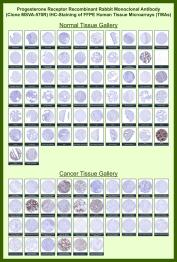
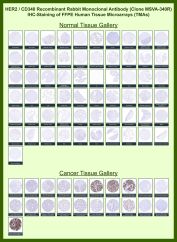
Many IHC antibodies are further evaluated using tissue microarray (TMA) analysis, enabling high-throughput comparison of staining patterns across large panels of normal and cancer tissues. This approach provides an added layer of validation and supports cross-tissue assessment of antibody performance. Explore a collection of IHC antibodies validated by tissue microarray analysis to identify markers with consistent staining across diverse tissue types.
IHC antibodies are designed to provide consistent staining across a wide range of tissue types, enabling comparative analysis of protein expression in both normal and diseased states. These antibodies support studies in epithelial biology, immunology, and tumor microenvironment research, making them valuable tools for both basic and translational applications.
A selection of IHC antibody products is shown below to support a range of research applications.
Browse the complete collection of research antibodies on our Antibodies landing page.

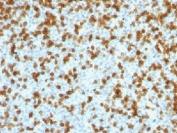
Estrogen Receptor beta Antibody for IHC. Immunohistochemistry analysis of ER beta expression in FFPE human ovarian carcinoma tissue using Estrogen Receptor beta antibody clone ERb455. Staining demonstrates strong nuclear HRP-DAB brown signal in tumor epithelial cells, consistent with hormone receptor localization, while surrounding stromal components show weaker or minimal staining. The distinct nuclear pattern supports identification of estrogen receptor signaling in ovarian cancer tissue and highlights the utility of this antibody for evaluating hormone receptor expression in tumor pathology and tissue-based studies.


 Powered by Bioz






 info@nsjbio.com