- Tel: 858.663.9055
 Email: info@nsjbio.com
- Tel: 858.663.9055
- Email: info@nsjbio.com
Email: info@nsjbio.com
CD27, also known as TNF receptor superfamily member 7 (TNFRSF7), is a type I transmembrane glycoprotein that plays a central role in adaptive immune responses. CD27 antibody reagents are widely used to detect this costimulatory receptor in immune cells, particularly in studies focused on T cell activation and memory B cell biology. Expression of CD27 is most prominent on T lymphocytes, memory B cells, and subsets of natural killer cells, where it supports immune cell survival, proliferation, and differentiation following activation.
CD27 functions through interaction with its ligand CD70, initiating signaling pathways that enhance cytokine production and promote the formation of long-lived immune memory. In T cells, CD27 expression helps define activation status and differentiation state, while in B cells it serves as a well-established marker distinguishing memory B cells from naive populations. This makes CD27 antibody tools essential for immunophenotyping, immune monitoring, and lymphocyte subset characterization.
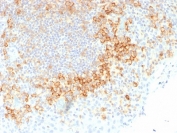
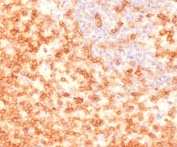
CD27 expression is dynamically regulated across immune cell development and activation states. In lymphoid tissues such as tonsil, spleen, and lymph node, CD27-positive cells are typically found within T cell zones and germinal center-associated regions enriched for memory B cells. Membranous localization is characteristic, consistent with its role as a surface receptor involved in cell-cell signaling.
Beyond normal physiology, CD27 expression is frequently evaluated in hematologic malignancies, including various lymphomas and leukemias, where it can aid in defining cell lineage and differentiation status. Alterations in CD27-CD70 signaling have also been linked to immune dysregulation and tumor immune escape mechanisms, further increasing the importance of accurate CD27 detection in research settings.
CD27 antibody reagents are used across a range of experimental approaches to assess immune cell populations and protein expression:
Careful antibody selection ensures reliable detection across these applications, with different clones and formats offering advantages depending on assay requirements.
Choosing the appropriate CD27 antibody depends on the experimental context. For tissue-based analysis, antibodies suitable for immunohistochemistry provide clear membranous staining of lymphocyte populations in FFPE samples. Flow cytometry-compatible antibodies enable accurate gating of CD27-positive immune subsets, particularly in studies of T cell activation and memory B cell differentiation. Western blot applications benefit from antibodies capable of detecting CD27 under denaturing conditions, while immunofluorescence supports detailed localization studies.
Our CD Antibody collection includes monoclonal, polyclonal, and recombinant antibody formats, allowing flexibility in experimental design and detection strategy.
Researchers exploring immune checkpoint regulation, memory lymphocyte biology, and cytokine mediated immune responses may also be interested in our Immunology Antibodies landing page featuring cytokines, immune receptors, and inflammatory signaling related proteins.
Browse the complete collection of research antibodies on our Antibodies landing page.
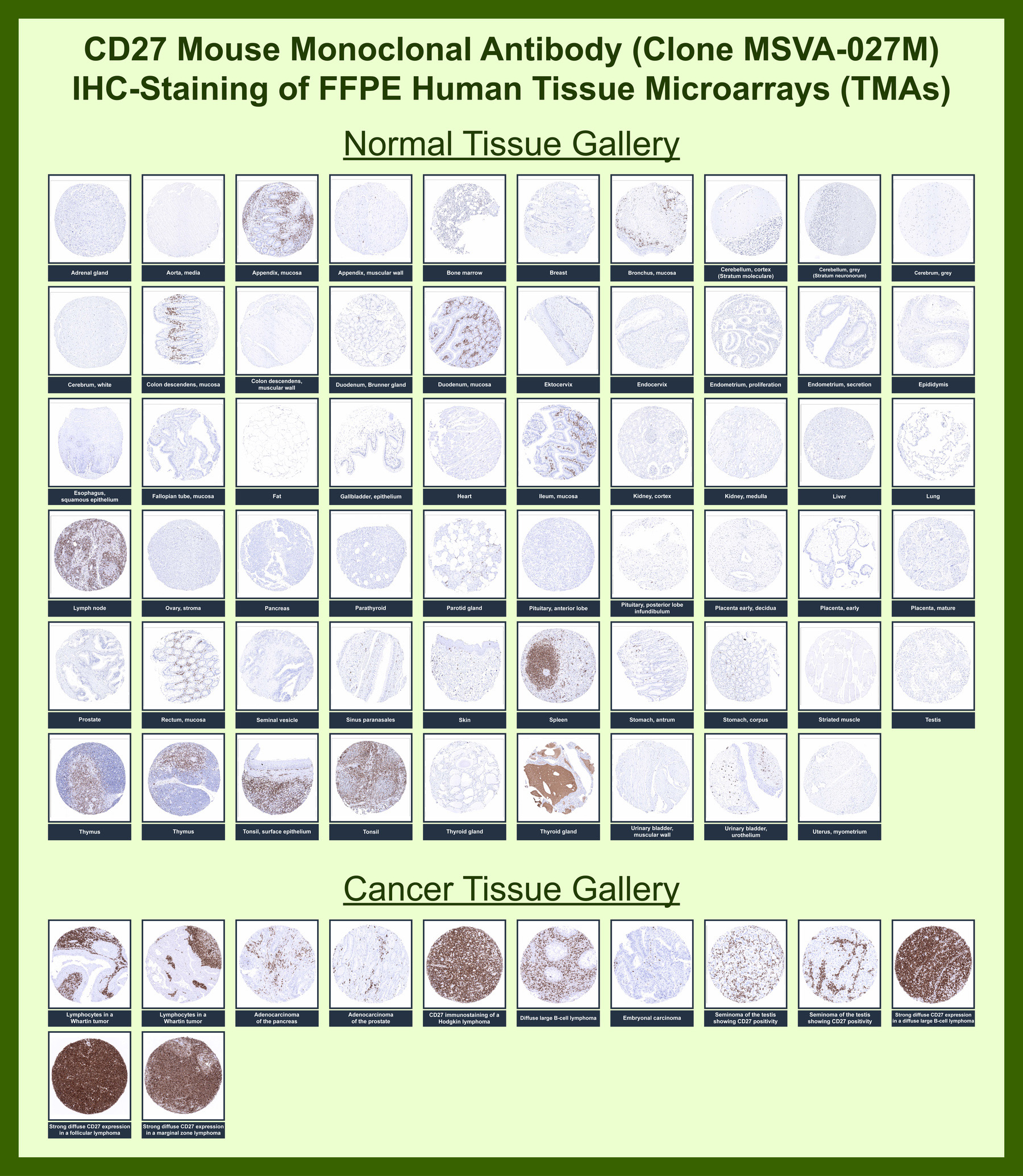
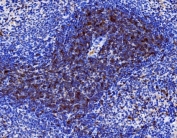
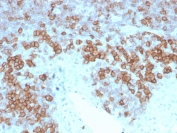
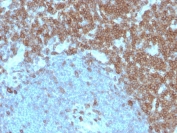
CD27 Antibody for IHC. Immunohistochemistry analysis of CD27 / TNFRSF7 expression in FFPE human tissue microarrays using CD27 Immunohistochemistry Antibody clone MSVA-027M, Cat #V6146. Tissue microarray staining demonstrates strong membranous HRP-DAB brown signal in lymphocyte-rich tissues including tonsil, lymph node, spleen, and thymus, consistent with CD27 expression on activated and memory T and B lymphocytes, while most non-lymphoid tissues show minimal or absent staining. Across cancer tissue arrays, CD27-positive tumor-infiltrating lymphocytes are readily detected in multiple malignancies, with particularly strong and diffuse staining observed in lymphoid neoplasms consistent with B-cell lineage origin. The broad tissue microarray profile highlights CD27 as a robust lymphocyte marker and supports its use in evaluating immune cell distribution and the tumor immune microenvironment in immunohistochemistry studies.

| ||

|


 Powered by Bioz




 info@nsjbio.com