- Tel: 858.663.9055
 Email: info@nsjbio.com
- Tel: 858.663.9055
- Email: info@nsjbio.com
Email: info@nsjbio.com
CD22, also known as B-cell receptor CD22 or Siglec-2, is a B cell-restricted transmembrane glycoprotein encoded by the CD22 gene. CD22 antibody reagents are widely used to study this key regulator of B cell signaling and immune homeostasis. Expression is largely confined to mature B lymphocytes, including peripheral B cells and germinal center B cells, making CD22 a highly specific marker of B cell lineage.
CD22 functions as an inhibitory co-receptor of the B cell receptor complex, modulating signaling thresholds through recruitment of phosphatases such as SHP-1. This mechanism plays an essential role in maintaining immune tolerance and preventing inappropriate activation of B cells. In addition, CD22 binds sialic acid-containing ligands, contributing to cell adhesion and positioning within lymphoid tissues.
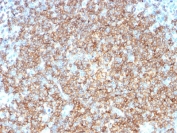
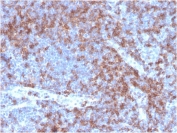
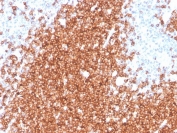
CD22 antibody tools are widely used to identify and characterize B cell populations in both normal and disease contexts. In tissue-based studies, CD22 expression is observed in lymphoid organs such as lymph node, spleen, and tonsil, where it highlights mature B cell populations with membranous and cytoplasmic staining patterns.
CD22 is consistently expressed in a range of B cell malignancies, including chronic lymphocytic leukemia, acute lymphoblastic leukemia, and non-Hodgkin lymphoma. This makes CD22 antibody-based detection valuable for studying tumor biology, lineage classification, and immune cell composition within the tumor microenvironment.
CD22 has also emerged as a target of interest in therapeutic research due to its restricted expression and ability to internalize upon antibody binding. These properties have driven the development of antibody-based targeting strategies in hematologic cancers.
CD22 antibody products are used across multiple experimental platforms, allowing comprehensive analysis of B cell biology and disease mechanisms.
A CD22 antibody is suitable for detecting CD22 expression in a wide range of immunology and cancer research applications.
CD antibody products are available in multiple formats, including monoclonal, polyclonal, and recombinant antibodies. Different CD22 clones may recognize distinct epitopes of the CD22 protein, allowing selection based on experimental requirements such as cell surface detection or intracellular analysis.
This CD22 antibody collection provides flexible options for studying B cell signaling, immune regulation, and hematologic malignancies, enabling consistent and reproducible detection of CD22 across research applications.
Scientists investigating adaptive immune regulation, leukocyte signaling pathways, and B-cell mediated immune responses may also be interested in our Immunology Antibodies landing page featuring cytokines, immune receptors, and host defense related proteins.
Browse the full collection of research antibodies on our Antibodies landing page.
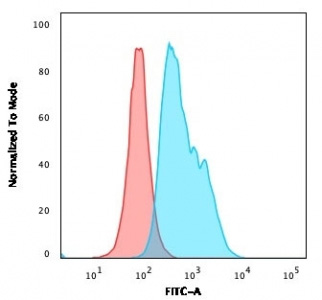
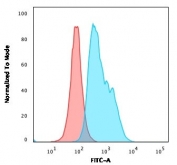
CD22 Antibody for FACS. Flow cytometry profiling of CD22/Siglec-2 in human Ramos B cell lymphoma cells using CD22 Flow Cytometry Antibody clone RFB4. The CD22 antibody (blue) shows a pronounced rightward fluorescence shift relative to isotype control (red), defining a well-resolved CD22-positive population. The sharp population separation reflects high surface expression of CD22 on B lymphocytes and supports its use for flow cytometry-based identification, gating, and analysis of B cell subsets in immunology research.




 Powered by Bioz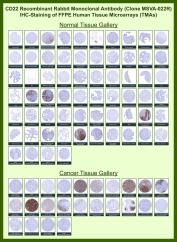




 info@nsjbio.com