- Tel: 858.663.9055
 Email: info@nsjbio.com
- Tel: 858.663.9055
- Email: info@nsjbio.com
Email: info@nsjbio.com
Aquaporins (AQPs) are a family of membrane channel proteins that facilitate the transport of water and small solutes across biological membranes, playing essential roles in fluid balance, cellular homeostasis, and organ function. Aquaporin antibody reagents are widely used to study membrane permeability, epithelial transport, and tissue-specific water regulation across a wide range of biological systems. The aquaporin family includes both classical water-selective channels and aquaglyceroporins, which transport glycerol and other small molecules involved in metabolic processes.
Aquaporin antibody, also referred to as AQP antibody or water channel protein antibody, enables detection of individual aquaporin isoforms across tissues such as kidney, brain, skin, liver, and glandular epithelium. Each subtype exhibits distinct localization and function, making isoform-specific detection critical for accurate biological interpretation. AQP1 antibody is widely used to study endothelial water transport, AQP2 antibody is a key tool for investigating vasopressin-regulated water reabsorption in kidney collecting ducts, and AQP4 antibody is commonly used as an astrocyte marker in central nervous system research.
Aquaglyceroporins such as AQP3 antibody, AQP7 antibody, and AQP9 antibody expand the functional diversity of this protein family by facilitating transport of glycerol and other small solutes. These proteins are particularly important in tissues such as skin, adipose tissue, and liver, where they contribute to hydration, lipid metabolism, and energy balance. Aquaporin antibody reagents targeting these subtypes support studies of epithelial biology, metabolic regulation, and cellular signaling pathways.
Aquaporin proteins are also closely linked to disease biology. AQP4 is associated with neuromyelitis optica and CNS edema, AQP2 is involved in disorders of water balance such as nephrogenic diabetes insipidus, and AQP0 plays a critical role in maintaining lens transparency. Aquaporin antibody tools are therefore widely used in research focused on neurological disease, kidney function, metabolic disorders, and epithelial pathology.
Water channel proteins such as AQP1 and AQP2 are central to renal physiology, regulating filtration and water reabsorption. AQP2 antibody is particularly important for studying vasopressin-regulated trafficking in collecting duct cells.
AQP4 is highly enriched in astrocytes and plays a critical role in brain water homeostasis and neuroinflammation. AQP4 antibody is widely used as a marker for glial cells and CNS structure.
AQP3 supports skin hydration and barrier function through glycerol transport. AQP3 antibody enables investigation of epithelial transport and wound healing processes.
Aquaglyceroporins such as AQP7 and AQP9 link membrane transport to lipid metabolism and energy balance. These antibodies are widely used in adipocyte and liver research.
AQP5 is involved in fluid secretion in salivary and pulmonary tissues. AQP5 antibody supports studies of epithelial secretion and glandular function.
Certain aquaporins such as AQP8 and AQP11 are localized to intracellular compartments and are involved in organelle-associated transport and cellular regulation.
A selection of aquaporin antibody products is shown below to support a range of research applications.
This Aquaporin antibody page is part of a broader antibody panel offered by NSJ Bioreagents.
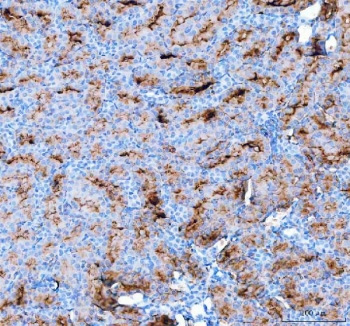
IHC staining of FFPE rat kidney tissue with Aquaporin 1 antibody (cat # R30178). HIER: boil tissue sections in pH8 EDTA for 20 min and allow to cool before testing.
|
| ||

|


 Powered by Bioz
 info@nsjbio.com