- Tel: 858.663.9055
 Email: info@nsjbio.com
- Tel: 858.663.9055
- Email: info@nsjbio.com
Email: info@nsjbio.com
TLR Antibodies are essential tools for investigating innate immune responses, pathogen recognition, inflammatory signaling, and host defense mechanisms. Toll-like receptors (TLRs) are a family of pattern recognition receptors that detect conserved microbial structures and endogenous danger signals, initiating signaling pathways that coordinate immune responses. Antibodies directed against TLR proteins and related signaling molecules enable researchers to investigate the molecular mechanisms that govern innate immunity and inflammatory regulation.
TLRs represent some of the most extensively studied receptors in immunology because they serve as a critical bridge between pathogen detection and downstream immune activation. As a result, TLR antibodies support a wide range of studies involving infection, inflammation, cancer immunity, autoimmunity, and immune signaling.
Toll-like receptors recognize pathogen-associated molecular patterns (PAMPs) and danger-associated molecular patterns (DAMPs) derived from infectious organisms or damaged tissues. Upon activation, TLRs initiate intracellular signaling cascades that regulate cytokine production, inflammatory responses, and immune cell activation.
Different TLR family members recognize distinct classes of molecular ligands. Some receptors detect bacterial cell wall components, while others recognize viral nucleic acids, microbial proteins, or endogenous inflammatory signals. Together, these receptors form a critical surveillance network that enables rapid detection of infection and tissue injury.
Frequently studied Toll-like receptors include:
These receptors are expressed by numerous immune and non-immune cell types and contribute to host defense, inflammatory signaling, and immune regulation.
Activation of Toll-like receptors triggers signaling pathways that regulate transcriptional programs involved in innate immunity. Many TLRs signal through adaptor proteins such as MYD88, TIRAP, TRIF, and TRAM, leading to activation of transcription factors including NF-kB, IRF3, IRF7, and AP-1.
These signaling pathways promote expression of cytokines, chemokines, interferons, and other mediators that coordinate immune responses. Antibodies directed against TLRs and associated signaling proteins support investigations into receptor activation, inflammatory regulation, and host-pathogen interactions.
Alterations in Toll-like receptor signaling have been implicated in infectious disease, chronic inflammation, autoimmune disorders, cancer progression, metabolic disease, and neuroinflammatory conditions. Dysregulated innate immune signaling can contribute to tissue damage, abnormal immune activation, and disease progression.
Researchers frequently utilize TLR antibodies to investigate inflammatory pathways, immune cell activation, pathogen recognition mechanisms, and therapeutic targets within innate immunity. These studies continue to improve understanding of how innate immune responses influence health and disease.
In addition to Toll-like receptors themselves, researchers commonly study proteins that participate in innate immune signaling networks, including:
These molecules work together with TLRs to coordinate cellular responses to infection, inflammation, and tissue injury.
TLR Antibodies are commonly used for:
These antibodies support investigations into both normal immune function and disease-associated inflammatory processes.
The TLR Antibody collection includes antibodies directed against Toll-like receptors and related innate immune signaling proteins involved in pathogen recognition, inflammatory regulation, cytokine production, and host defense. These reagents support investigations into innate immunity, inflammatory signaling pathways, infection biology, and immune-mediated disease mechanisms.
Researchers studying cytokine signaling, immune activation pathways, and host defense mechanisms may also be interested in our Immunology Antibodies landing page featuring leukocyte markers, cytokines, and immune regulatory proteins.
Browse the complete collection of research antibodies on our Antibodies landing page.
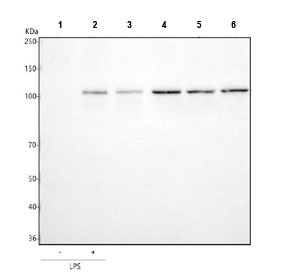
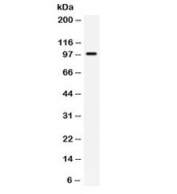
TLR2 Antibody Human Cell Line WB. Western blot analysis of human cell lysates using TLR2 Antibody detects a distinct band at approximately 95-105 kDa, consistent with the expected migration pattern of Toll-Like Receptor 2 (TLR2), a glycosylated transmembrane pattern recognition receptor with a predicted molecular weight of approximately 85-90 kDa. Lanes: 1) ThP-1 without LPS treatment, 2) ThP-1 with LPS treatment, 3) HaCaT, 4) PC-3, 5) Caco-2, and 6) HepG2. TLR2 expression is observed in both immune-derived and epithelial-derived cell types, consistent with its established role in pathogen recognition, innate immune activation, and inflammatory signaling. Detection in monocytic ThP-1 cells as well as keratinocyte, intestinal, hepatic, and prostate-derived cell lines reflects the broad distribution of TLR2 across tissues involved in host defense and environmental sensing. This image supports studies of Toll-like receptor biology, innate immunity, and inflammatory pathway regulation.

| ||

|


 Powered by Bioz



 info@nsjbio.com