- Tel: 858.663.9055
 Email: info@nsjbio.com
- Tel: 858.663.9055
- Email: info@nsjbio.com
Email: info@nsjbio.com
T-Cell Antibodies are essential tools for investigating adaptive immune responses, cellular immunity, lymphocyte development, and immune regulation. T lymphocytes are central mediators of immune defense and play critical roles in antigen recognition, pathogen elimination, immune memory, and immune homeostasis. Antibodies directed against T-cell markers enable researchers to identify specific lymphocyte populations and investigate the molecular pathways that regulate T-cell activation, differentiation, and function.
T cells are among the most extensively studied immune cell populations due to their involvement in infection, inflammation, cancer immunity, transplantation biology, and autoimmune disease. As a result, T-cell antibodies support a wide range of immunology and biomedical research applications.
T lymphocytes originate from hematopoietic progenitor cells and undergo maturation within the thymus before entering peripheral immune tissues. Following antigen recognition, T cells coordinate complex immune responses through cytokine production, cellular signaling, and direct interactions with other immune cell populations.
Multiple T-cell subsets contribute to immune regulation, including helper T cells, cytotoxic T cells, regulatory T cells, memory T cells, and activated effector populations. Antibodies directed against T-cell-associated proteins help researchers distinguish these populations and investigate mechanisms that govern cellular immunity.
Frequently studied T-cell-associated proteins include:
These markers support investigations into T-cell development, activation status, differentiation pathways, and immune cell subset identification.
T lymphocytes are involved in numerous physiological and pathological processes. Altered T-cell function contributes to autoimmune disorders, chronic inflammation, infectious diseases, transplant rejection, and cancer progression. In addition, T-cell-mediated immune responses are central to many modern immunotherapeutic approaches.
Researchers frequently utilize T-cell antibodies to investigate immune activation, immune suppression, antigen-specific responses, and cellular communication networks that influence disease progression. These studies continue to expand understanding of both normal immune function and disease-associated immune dysregulation.
T-cell activation depends on coordinated signaling events initiated through antigen recognition and receptor engagement. These signaling pathways regulate proliferation, differentiation, cytokine production, and immune effector functions.
Antibodies directed against T-cell markers, receptors, transcription factors, and signaling proteins support investigations into immune signaling pathways that control cellular responses. Understanding these molecular mechanisms remains important for immunology research, therapeutic development, and studies of immune regulation.
T-Cell Antibodies are commonly used for:
These antibodies support investigations into both normal immune physiology and disease-associated immune responses.
The T-Cell Antibody collection includes antibodies directed against proteins involved in T-cell development, activation, differentiation, signaling, and immune regulation. These reagents support investigations into lymphocyte biology, adaptive immunity, immune signaling pathways, and disease-associated immunologic mechanisms.
Researchers studying lymphocyte activation, immune signaling pathways, and host defense mechanisms may also be interested in our Immunology Antibodies landing page featuring cytokines, leukocyte markers, and immune regulatory proteins.
Browse the complete collection of research antibodies on our Antibodies landing page.
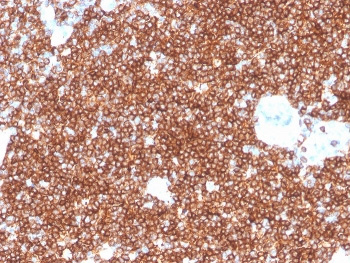
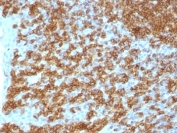
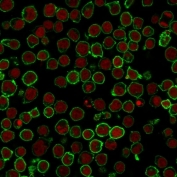
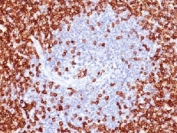
CD4 Antibody Human Tonsil IHC. Immunohistochemistry analysis of FFPE human tonsil tissue using CD4 Antibody clone rCD4/3930 demonstrates strong HRP-DAB brown membranous staining of T-lymphocyte populations within interfollicular regions and surrounding lymphoid follicles. The staining pattern is consistent with the established expression of CD4 on helper T cells, which play central roles in antigen recognition, immune signaling, and adaptive immune responses. This image highlights T-cell-rich areas within secondary lymphoid tissue and supports studies of T-cell biology, lymphocyte activation, and immune regulation. HIER: boil tissue sections in pH 9 10 mM Tris with 1 mM EDTA for 20 minutes and allow to cool before testing.


 Powered by Bioz

 Citations (13)





 info@nsjbio.com