- Tel: 858.663.9055
 Email: info@nsjbio.com
- Tel: 858.663.9055
- Email: info@nsjbio.com
Email: info@nsjbio.com
Programmed death-ligand 1 (PD-L1), also known as CD274 or B7-H1, is a key immune checkpoint protein that regulates T cell activation through interaction with PD-1. PD-L1 antibody reagents are widely used to study tumor immune evasion, immune checkpoint signaling, and tumor microenvironment dynamics in cancer research.
PD-L1 expression is frequently upregulated in tumor cells and tumor-infiltrating immune cells, where it contributes to suppression of anti-tumor immune responses. As a result, PD-L1 has become a central marker in immuno-oncology and a critical target for evaluating immune checkpoint pathways in tissue-based studies.
PD-L1 plays a central role in tumor immune escape by binding PD-1 on activated T cells, leading to inhibition of T cell proliferation and cytokine production. This interaction enables tumors to evade immune surveillance and contributes to disease progression.
PD-L1 expression is observed in a wide range of malignancies, including lung carcinoma, melanoma, renal cell carcinoma, bladder cancer, and others. Expression may occur on tumor cells as well as immune infiltrates such as macrophages and lymphocytes, reflecting the complexity of the tumor microenvironment.
Evaluation of PD-L1 expression in tissue sections provides insight into immune activity within tumors and supports studies of immune checkpoint regulation and therapeutic response.
PD-L1 antibody for IHC is commonly used to evaluate membranous staining patterns in formalin-fixed, paraffin-embedded tissues. Membranous localization in tumor cells is a key feature of PD-L1 expression, often accompanied by staining in tumor-infiltrating immune cells.
Tissue microarray (TMA) analysis enables comparison of PD-L1 expression across a broad range of normal and cancer tissues under standardized conditions. Across TMA panels, most normal tissues show limited or inducible expression, typically restricted to immune cell populations, while tumor tissues display variable but often elevated membranous staining.
This contrast between normal and tumor tissues supports the use of PD-L1 antibody in comparative tissue profiling and immune context evaluation.
PD-L1 antibody reagents are used in multiple research applications:
Among these, immunohistochemistry remains the primary method for assessing spatial distribution and localization of PD-L1 within tissue architecture.
Selection of a PD-L1 antibody depends on experimental goals and sample type:
Antibodies validated using tissue microarray panels provide additional confidence in staining consistency and tissue-specific expression patterns.
A selection of PD-L1 antibody products is shown below to support a range of research applications.
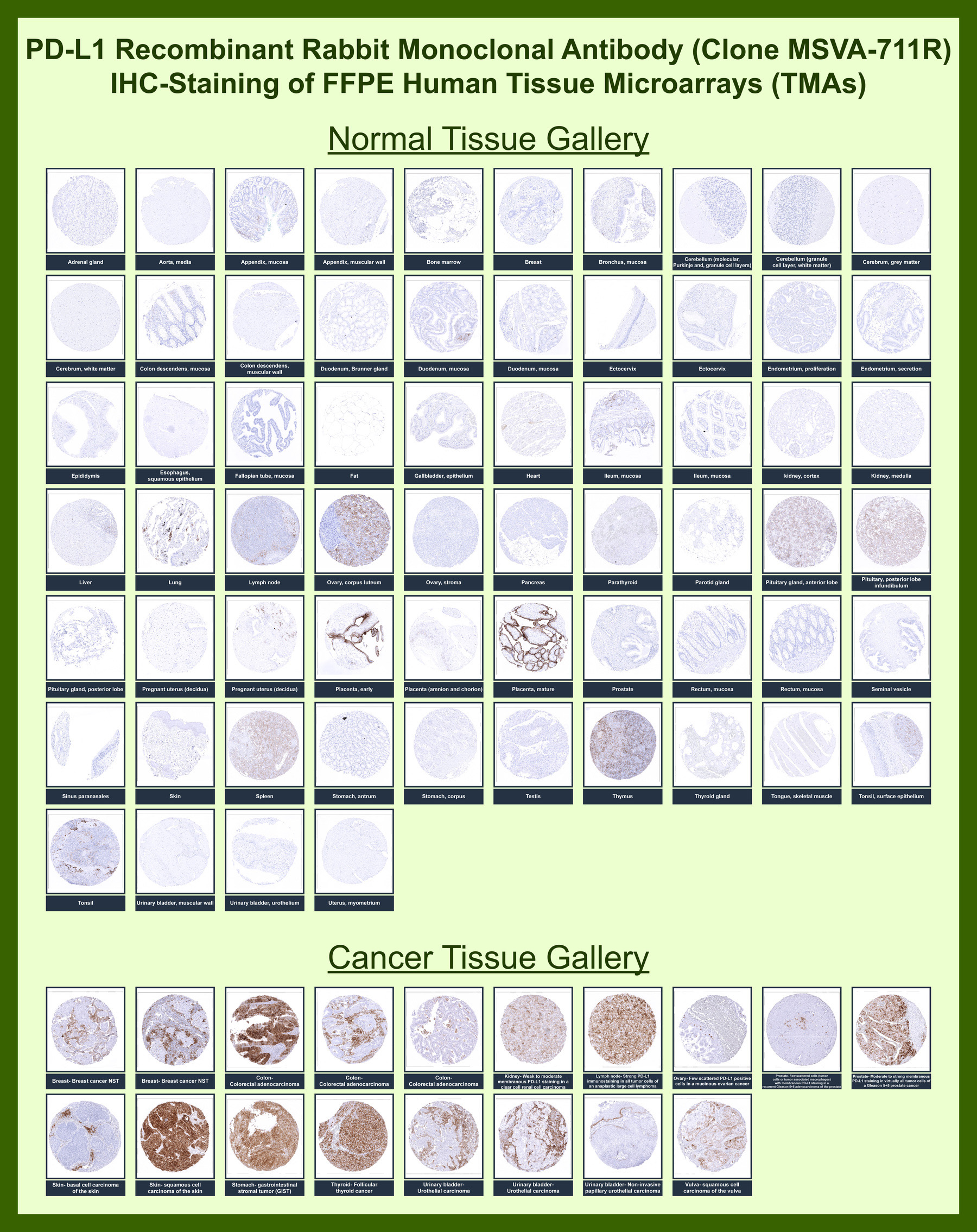
PD-L1 Antibody for IHC Tissue Microarray (TMA). Immunohistochemistry analysis of PD-L1 (CD274) expression in FFPE human tissue microarrays using recombinant rabbit monoclonal clone MSVA-711R. Tissue Microarray (TMA) staining demonstrates variable membranous HRP-DAB brown signal in tumor cells and tumor-infiltrating immune cells across multiple carcinoma types, while most normal tissues show minimal or inducible expression. Membranous staining in tumor cells and associated immune infiltrates may be evaluated to assess relative PD-L1 expression levels and immune checkpoint activity, supporting comparative analysis of tumor immune context and scoring-based interpretation of expression patterns. The distribution of staining across tissues is consistent with reported CD274 expression profiles in the Human Protein Atlas.




 Powered by Bioz

 info@nsjbio.com