- Tel: 858.663.9055
 Email: info@nsjbio.com
- Tel: 858.663.9055
- Email: info@nsjbio.com
Email: info@nsjbio.com
Napsin A (NAPSA) is a lysosomal aspartic protease primarily expressed in lung and kidney tissues, where it plays a key role in protein processing within secretory pathways. NAPSA antibody reagents, also commonly referred to as Napsin A antibody products, are widely used to study epithelial differentiation, tissue-specific expression, and tumor classification. Due to its restricted expression pattern and strong association with lung adenocarcinoma, NAPSA antibody detection is frequently applied in research focused on pulmonary biology and cancer pathology.
NAPSA antibody, also known as Napsin A antibody, is a well-established marker of lung epithelial identity and is particularly valuable for distinguishing primary lung tumors from metastatic lesions. Its consistent expression in lung adenocarcinoma and absence in most non-pulmonary tumors make it a reliable tool for tissue characterization and biomarker studies.
Napsin A is an intracellular protease involved in the maturation of surfactant protein B in type II pneumocytes, linking its function directly to lung physiology and respiratory homeostasis. The protein is localized within lysosomal and secretory vesicles, where it contributes to protein processing and intracellular trafficking. In normal tissues, NAPSA expression is highest in lung alveolar epithelial cells and renal proximal tubules, reflecting its specialized role in epithelial cell function.
In disease contexts, Napsin A expression is strongly associated with lung adenocarcinoma and is frequently retained in tumor cells that maintain features of alveolar differentiation. NAPSA antibody staining is therefore widely used in studies of tumor origin and epithelial lineage, particularly when distinguishing lung-derived tumors from other carcinoma types.
NAPSA antibodies support detection of Napsin A across a wide range of experimental platforms, enabling analysis of protein expression, localization, and processing. These antibodies provide consistent detection of cytoplasmic Napsin A in epithelial cells and are particularly useful for identifying lineage-specific expression patterns in both normal and tumor tissues.
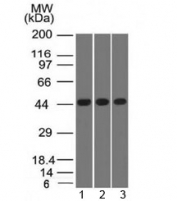
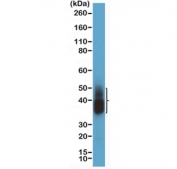
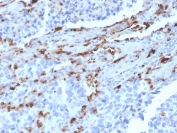
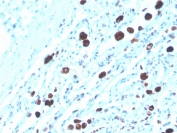
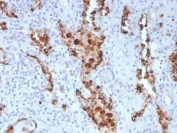
In immunohistochemistry, NAPSA antibody staining reveals strong cytoplasmic localization in lung adenocarcinoma and normal alveolar epithelium, often with granular distribution reflecting lysosomal compartments. In western blot applications, Napsin A can be detected as multiple bands corresponding to precursor and processed forms of the protein. In immunofluorescence, NAPSA antibodies enable visualization of intracellular localization, while in flow cytometry, they support analysis of intracellular expression in permeabilized cell populations.
Designed for formalin-fixed, paraffin-embedded tissue analysis, these antibodies provide strong cytoplasmic staining in lung epithelial cells and adenocarcinoma tissues, supporting histological evaluation and tumor classification.
Optimized for protein detection in lysates, these antibodies enable analysis of Napsin A expression and processing, with clear banding patterns reflecting precursor and mature forms.
Suitable for fluorescence-based imaging, these antibodies allow visualization of Napsin A localization within intracellular vesicular compartments.
Applicable to flow cytometry workflows, these antibodies support detection of intracellular Napsin A expression across cell populations.
NAPSA antibody products provide reliable detection of Napsin A across multiple research applications, supporting studies in lung biology, epithelial differentiation, and cancer research. By combining strong tissue specificity with consistent expression patterns, Napsin A antibodies remain valuable tools for investigating protein expression and cellular identity in both normal and disease contexts.
Researchers studying pulmonary epithelial differentiation, lung adenocarcinoma biomarkers, and tumor lineage identification pathways may also be interested in our Cancer Antibodies landing page featuring tumor biomarkers, signaling mediators, and oncology related targets.
Browse the complete collection of research antibodies on our Antibodies landing page.
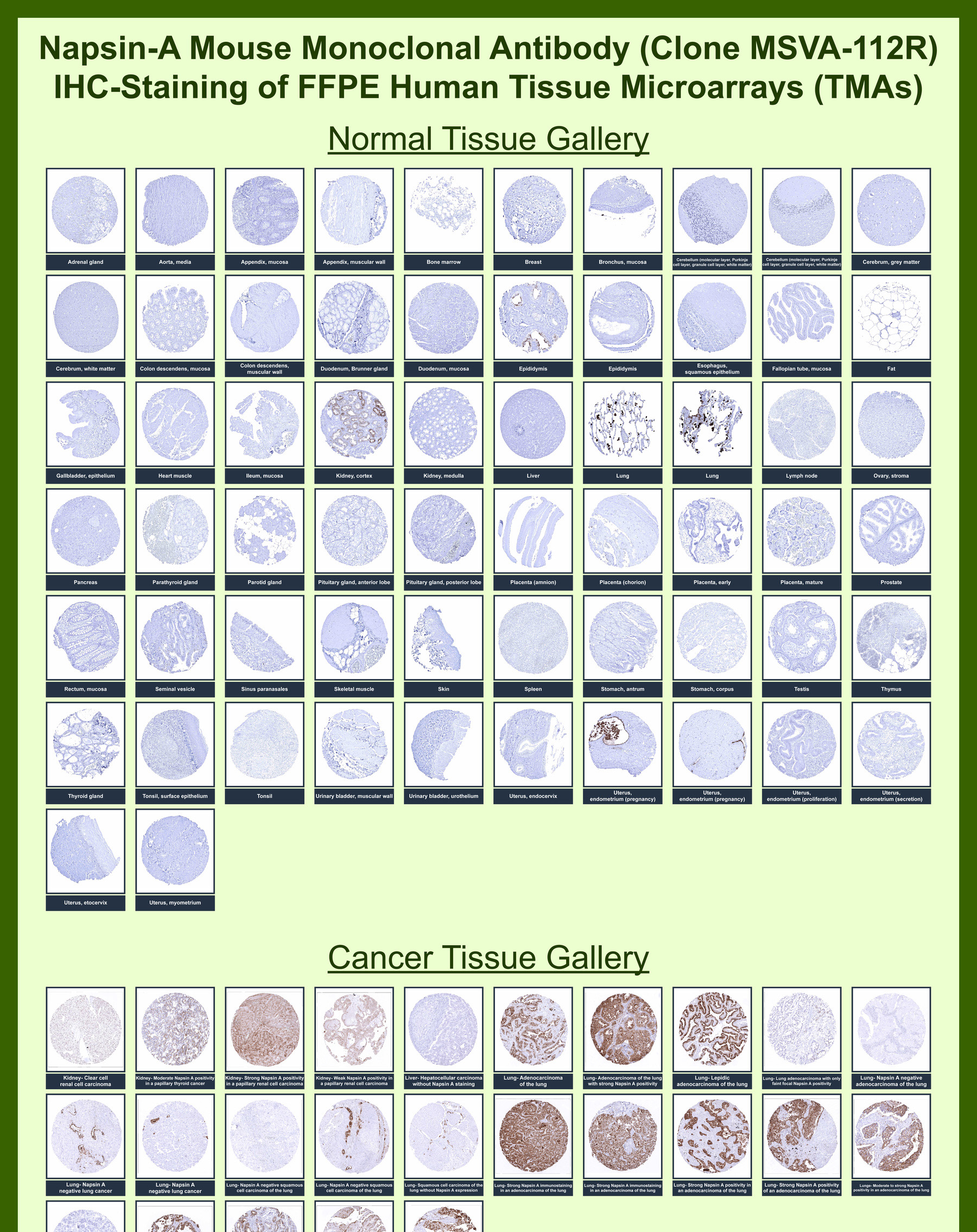
NAPSA Antibody for IHC. Immunohistochemistry analysis of Napsin A (NAPSA) expression in FFPE human tissue microarray (TMA) demonstrates highly restricted cytoplasmic HRP-DAB brown staining in lung alveolar epithelium and strong, diffuse signal in lung adenocarcinoma cores, while most non-pulmonary tissues remain negative. Clone MSVA-112R highlights consistent expression across multiple tumor samples, supporting Napsin A as a pulmonary epithelial marker and a reliable indicator of lung adenocarcinoma. The observed staining pattern aligns with expression data reported in the Human Protein Atlas.




 Powered by Bioz







 info@nsjbio.com