- Tel: 858.663.9055
 Email: info@nsjbio.com
- Tel: 858.663.9055
- Email: info@nsjbio.com
Email: info@nsjbio.com
Chromogranin A (CHGA) is a secretory glycoprotein widely expressed in neuroendocrine cells and plays a key role in the formation of secretory granules and regulated hormone release. Chromogranin A antibody products are commonly used to identify neuroendocrine differentiation in both normal tissues and tumors, making CHGA a well-established marker in endocrine biology and pathology. Expression is typically localized to cytoplasmic secretory granules in neuroendocrine cells, including those found in adrenal medulla, pancreas, gastrointestinal tract, and lung.
Chromogranin A antibodies are widely applied in research settings to evaluate neuroendocrine cell populations, tumor origin, and secretory activity. Their strong and characteristic staining patterns make them a reliable tool for detecting neuroendocrine differentiation across a broad range of tissues and experimental systems.
Immunohistochemistry is the most commonly used method for detecting Chromogranin A expression in tissue samples. A Chromogranin A antibody for immunohistochemistry enables clear visualization of neuroendocrine cells through granular cytoplasmic staining patterns. This staining is particularly prominent in endocrine tissues and neuroendocrine tumors, where dense core secretory granules produce strong, punctate cytoplasmic signal.
In tumor samples, Chromogranin A staining is frequently used to identify neuroendocrine differentiation and distinguish neuroendocrine tumors from non-neuroendocrine malignancies. Consistent staining in tissue sections makes IHC a key application for CHGA detection in both research and diagnostic workflows.
Chromogranin A is one of the most widely used markers for neuroendocrine tumors, including carcinoid tumors, small cell carcinoma, and pancreatic neuroendocrine neoplasms. A Chromogranin A neuroendocrine marker antibody supports identification of tumor cell populations that exhibit secretory activity and endocrine differentiation.
Expression levels and staining intensity can vary depending on tumor type and differentiation status, providing additional insight into tumor biology. Chromogranin A is often used alongside other neuroendocrine markers such as synaptophysin to provide a more comprehensive assessment of neuroendocrine phenotype.
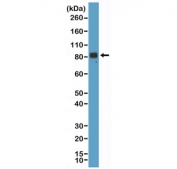
In addition to tissue-based applications, Chromogranin A antibodies can be used in western blot and cell-based assays to evaluate protein expression and processing. A Chromogranin A antibody for western blot supports detection of CHGA in cell lysates, enabling analysis of protein levels and secretion-related processing events.
These approaches are useful for studying neuroendocrine differentiation, hormone secretion pathways, and cellular responses to physiological or experimental stimuli. Chromogranin A detection in cultured cells complements tissue-based findings and provides additional functional context.
Selection of a Chromogranin A antibody depends on application, tissue type, and experimental goals. Antibodies optimized for immunohistochemistry are ideal for tissue localization studies, while western blot-compatible antibodies support protein-level analysis in lysates. Antibodies demonstrating consistent staining in neuroendocrine tissues and tumors provide reliable tools for evaluating CHGA expression across a wide range of biological contexts.
Researchers studying neuroendocrine differentiation, secretory granule biology, and peptide hormone processing pathways may also be interested in our Cell Biology Antibodies landing page featuring vesicle associated proteins, intracellular markers, and signaling related targets.
Researchers investigating neuroendocrine tumor markers, endocrine signaling networks, and inflammatory microenvironment interactions may also be interested in our Immunology Antibodies landing page featuring cytokines, immune regulators, and host defense related proteins.
A selection of Chromogranin A antibody products is shown below to support a range of research applications.
These Chromogranin antibodies are part of a broader antibody panel offered by NSJ Bioreagents.
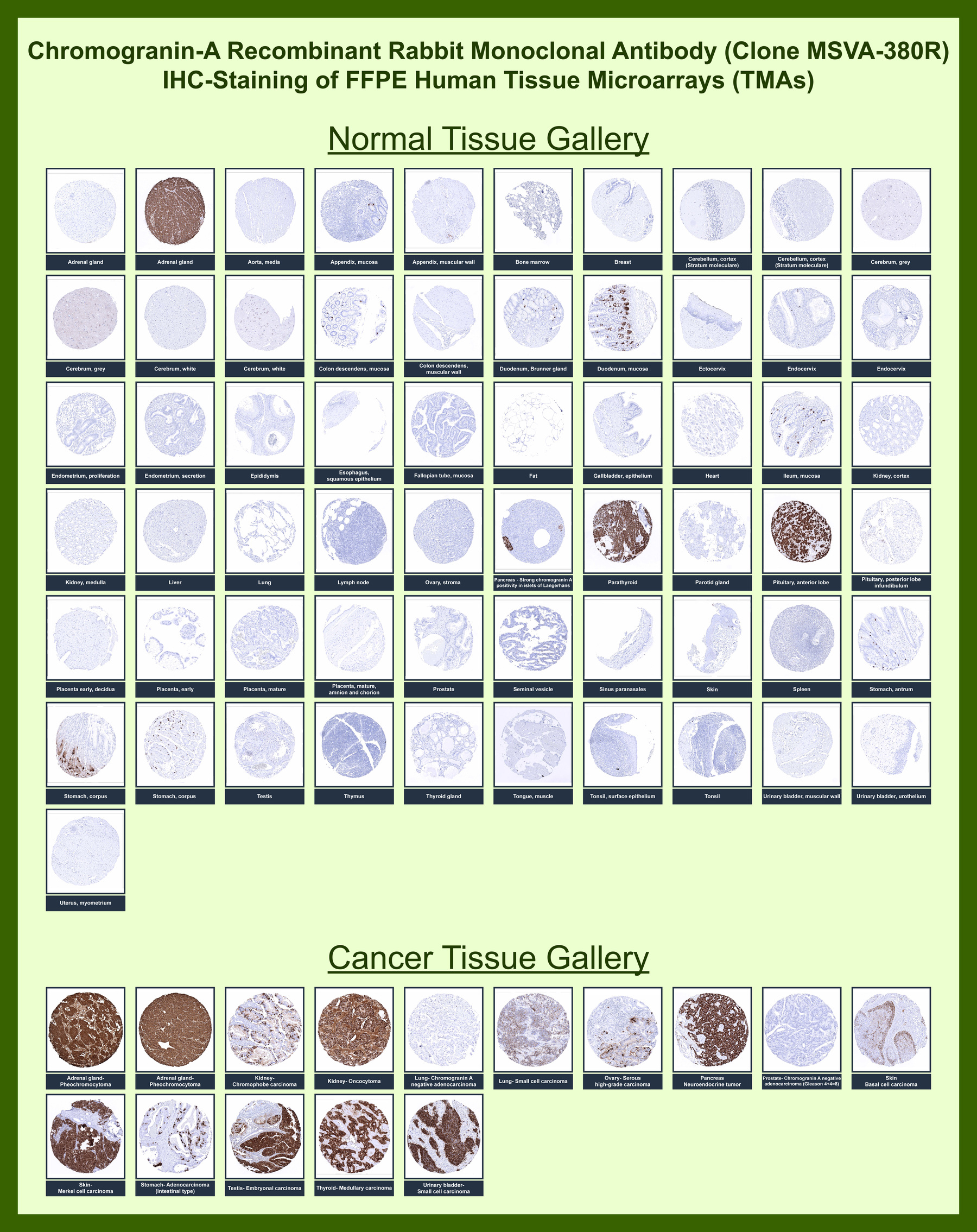
Chromogranin A Antibody IHC Tissue Microarray (TMA). Immunohistochemistry analysis of Chromogranin A / CHGA expression across formalin-fixed, paraffin-embedded human normal and cancer tissue microarrays using Chromogranin A antibody clone MSVA-380R. Tissue microarray (TMA) staining with HRP-DAB brown chromogen demonstrates strong granular cytoplasmic localization in neuroendocrine cell populations, including adrenal medulla, pancreatic islets, and scattered enteroendocrine cells of the gastrointestinal tract, while most non-neuroendocrine tissues show minimal background signal. Across cancer tissue arrays, robust cytoplasmic staining is observed in neuroendocrine tumors such as pheochromocytoma, small cell carcinoma, medullary thyroid carcinoma, and pancreatic neuroendocrine tumor, whereas non-neuroendocrine malignancies remain largely negative. Evaluation across large TMA panels enables consistent comparison of CHGA expression patterns across diverse tissue types, supporting its role as a neuroendocrine marker.


 Citations (9)
 Powered by Bioz








 info@nsjbio.com