- Tel: 858.663.9055
 Email: info@nsjbio.com
- Tel: 858.663.9055
- Email: info@nsjbio.com
Email: info@nsjbio.com
CD34 (Cluster of Differentiation 34) is a transmembrane glycoprotein widely recognized as a marker of hematopoietic stem and progenitor cells, as well as vascular endothelial cells. CD34 plays an important role in cell adhesion, migration, and the maintenance of stem cell niches, making it a critical target in both developmental biology and disease research. CD34 expression is also frequently used to evaluate angiogenesis and tumor vascularization, particularly in oncology and pathology studies.
CD34 antibodies are essential tools for identifying stem cell populations, assessing vascular density, and characterizing tumor microenvironments. Their utility spans a wide range of experimental approaches, from tissue-based detection to cell population analysis.
CD34 is a sialomucin-like cell surface protein that contributes to cell-cell and cell-matrix interactions. It is highly expressed on early hematopoietic stem cells and progenitor cells within bone marrow, where it supports stem cell maintenance and mobilization. In addition to hematopoietic compartments, CD34 is strongly expressed on vascular endothelial cells, where it contributes to endothelial integrity and angiogenic processes.
Functionally, CD34 is involved in regulating adhesion through interactions with selectins and other adhesion molecules, facilitating leukocyte trafficking and stem cell homing. Its expression is tightly regulated during differentiation, decreasing as hematopoietic cells mature, which makes it a valuable marker for identifying undifferentiated cell populations.
In cancer biology, CD34 serves as a widely used indicator of microvessel density, helping researchers assess tumor angiogenesis and vascular remodeling. Its presence in tumor-associated endothelial cells provides insight into tumor growth, invasion, and response to anti-angiogenic therapies.
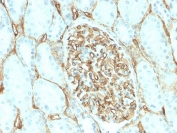
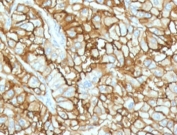
CD34 antibodies are extensively used in immunohistochemistry to visualize vascular structures and identify endothelial cells within tissues. In normal tissues, CD34 highlights blood vessels with clear membranous staining of endothelial cells. In tumor samples, CD34 staining is commonly used to quantify microvessel density and evaluate angiogenesis.
CD34 IHC is also useful in identifying certain soft tissue tumors and hematologic malignancies, where CD34 expression can help distinguish specific cell populations and support diagnostic interpretation.
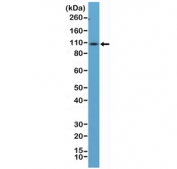
In western blot applications, CD34 antibodies detect the CD34 protein in cell lysates, allowing researchers to confirm expression levels and study regulation across different cell types. Western blot analysis is particularly useful for validating CD34 expression in stem cell cultures, endothelial cell models, and engineered systems.
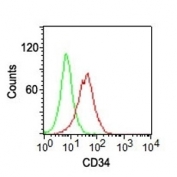
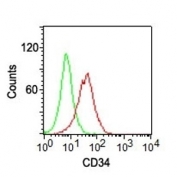
CD34 antibodies are widely used in flow cytometry for identifying and isolating hematopoietic stem and progenitor cells. CD34-positive populations are routinely analyzed in bone marrow, peripheral blood, and cord blood samples. This application is central to stem cell research, transplantation studies, and immune profiling.
Flow cytometry using CD34 antibodies enables precise gating of stem cell populations and supports downstream applications such as cell sorting and functional assays.
In immunofluorescence, CD34 antibodies allow visualization of endothelial networks and stem cell localization within tissues or cultured cells. Fluorescent labeling provides high-resolution insight into vascular architecture and cellular distribution, making it useful for co-localization studies and imaging-based analysis.
Selecting the appropriate CD34 antibody depends on the intended application and experimental context. For tissue-based studies, antibodies optimized for immunohistochemistry provide strong and consistent staining of endothelial structures. For protein detection, western blot-compatible antibodies are useful for confirming expression and studying regulation. Flow cytometry applications require antibodies that recognize extracellular epitopes and provide clear population separation.
Researchers may also consider clone-specific performance, conjugation options, and validation approaches when selecting a CD34 antibody for their studies.
NSJ Bioreagents offers a range of CD antibodies designed to support diverse research needs, including vascular biology, stem cell research, and oncology studies. These antibodies are suitable for detecting CD expression across multiple experimental systems and biological contexts.
Researchers exploring angiogenesis, immune cell development, and endothelial-hematopoietic interactions may also be interested in our Immunology Antibodies landing page featuring cytokines, leukocyte markers, and inflammatory response related proteins.
Browse the complete collection of research antibodies on our Antibodies landing page.
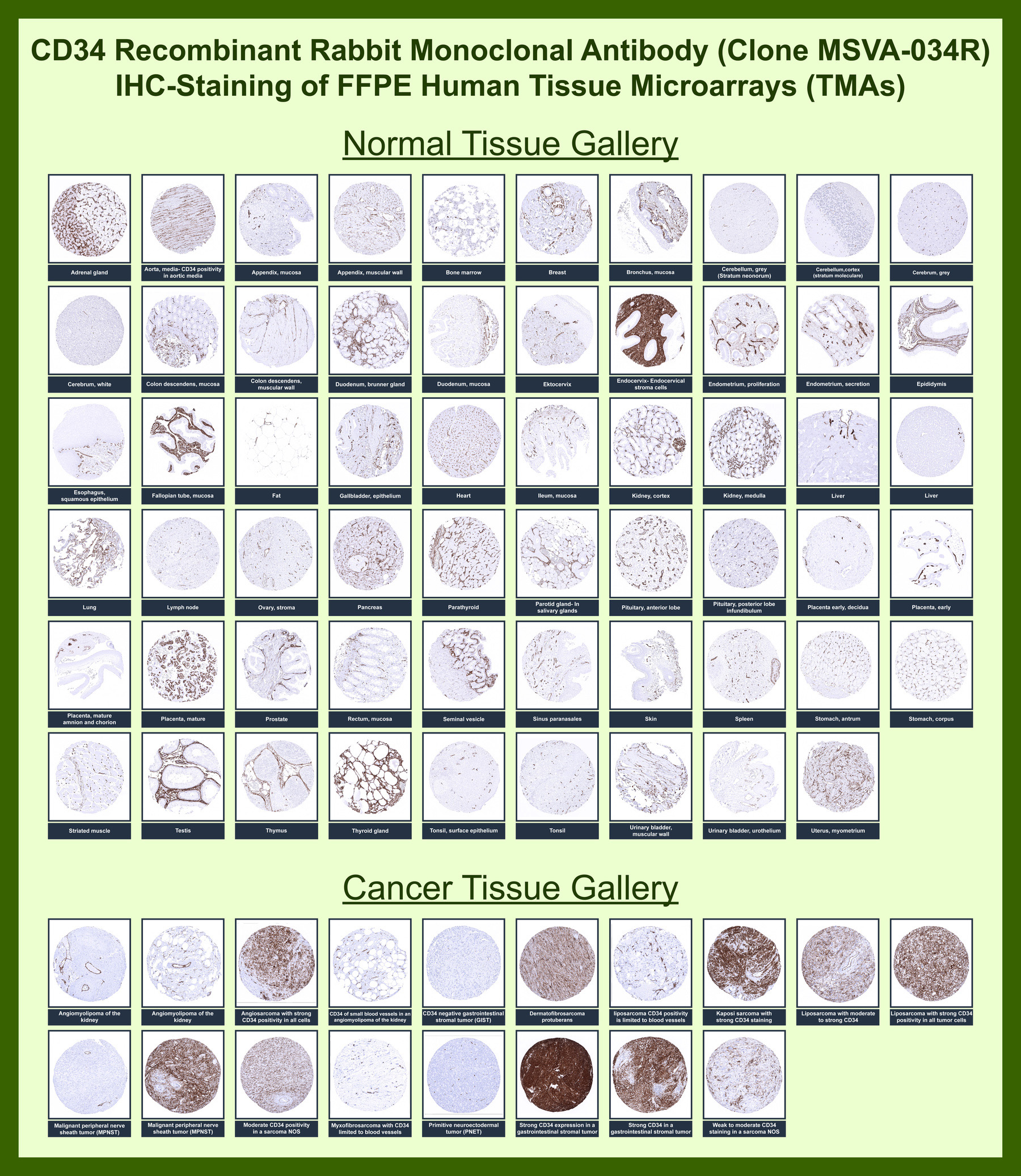
CD34 Antibody Tissue Microarray IHC. Immunohistochemistry analysis of CD34 expression across FFPE human tissue microarrays using CD34 antibody clone MSVA-034R demonstrates consistent membranous HRP-DAB brown staining in vascular endothelial cells throughout a wide range of normal and cancer tissues. In normal tissues, staining highlights organized vascular networks including capillaries and larger vessels, while epithelial, stromal, and parenchymal cells remain largely negative. In cancer tissues, CD34-positive endothelial cells outline tumor-associated vasculature with variable density and morphology, reflecting differences in vascular architecture and angiogenic activity across tumor types. The staining pattern supports broad visualization of endothelial cell distribution and vascular structures across diverse tissue contexts, consistent with CD34 as a pan-endothelial marker.

| ||

|




 Powered by Bioz

 Citations (5)



 info@nsjbio.com