- Tel: 858.663.9055
 Email: info@nsjbio.com
- Tel: 858.663.9055
- Email: info@nsjbio.com
Email: info@nsjbio.com
Recombinant Mouse Antibodies are engineered monoclonal antibodies generated using recombinant expression technologies designed to support highly reproducible target detection across cell biology, cancer research, immunology, neuroscience, metabolism, and translational pathology applications. Recombinant Mouse Antibodies are widely used for immunohistochemistry, western blotting, immunofluorescence, flow cytometry, immunoprecipitation, and additional laboratory workflows requiring consistent antibody performance and scalable production characteristics.
Unlike traditional hybridoma-derived monoclonal antibodies that rely on continuous maintenance of antibody-producing cell lines, recombinant mouse monoclonal antibodies are generated through defined sequence-based cloning and recombinant expression systems. This approach enables stable antibody sequence preservation and reduces lot-to-lot variability associated with long-term hybridoma drift or instability. Recombinant antibody technologies have therefore become increasingly important for studies requiring reproducibility across large experimental datasets, long-term validation projects, and translational biomarker development.
Recombinant antibody production involves sequencing immunoglobulin variable regions derived from selected monoclonal antibody clones followed by recombinant expression in controlled host systems. Because the antibody sequence is molecularly defined, recombinant mouse antibodies can provide improved manufacturing consistency and preservation of target-binding characteristics across production lots.
Many recombinant mouse monoclonal antibodies are developed against:
Recombinant technologies also facilitate scalable antibody generation for high-demand targets used extensively in pathology, oncology, and cell signaling research.
Recombinant Mouse Antibodies are commonly used in:
Because recombinant antibodies are sequence-defined, they are frequently selected for studies emphasizing long-term reproducibility, biomarker validation, and standardized detection workflows across multiple experimental platforms.
Recombinant monoclonal antibodies are increasingly important in cancer biology and translational pathology due to the growing emphasis on reproducibility and standardized biomarker characterization. Recombinant Mouse Antibodies are commonly used to evaluate oncogenic signaling pathways, immune checkpoint regulation, tumor suppressor expression, chromatin remodeling proteins, stem cell-associated markers, and metabolic signaling proteins within normal and malignant tissue.
Many recombinant antibody targets are associated with clinically relevant pathways involving:
These antibodies are frequently evaluated in FFPE tissue, cultured cells, xenograft models, and tissue microarray studies examining disease-associated expression patterns.
One major advantage of recombinant antibody platforms is the ability to preserve antibody identity through sequence-defined production rather than indefinite hybridoma propagation. This approach supports reproducibility across laboratories and over extended research timelines. Recombinant mouse monoclonal antibodies are therefore widely incorporated into studies involving large-scale screening, pathway analysis, and long-term translational biomarker development.
Recombinant antibody technologies also support continued expansion of validated monoclonal antibody collections targeting proteins involved in cancer biology, immunology, neuroscience, metabolism, stem cell signaling, and epigenetic regulation.
A selection of Recombinant Mouse Antibodies products is shown below to support a range of research applications.
These antibodies are part of a broader antibody panel offered by NSJ Bioreagents.
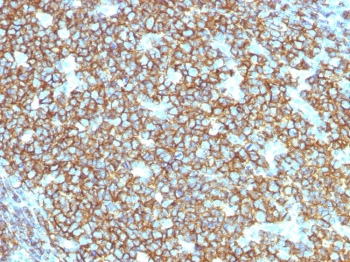
Recombinant CD20 Antibody Tonsil IHC. Immunohistochemistry staining of FFPE human tonsil tissue with recombinant CD20 antibody (clone rIGEL/773).




 Powered by Bioz




 info@nsjbio.com