- Tel: 858.663.9055
 Email: info@nsjbio.com
- Tel: 858.663.9055
- Email: info@nsjbio.com
Email: info@nsjbio.com
Cystic fibrosis transmembrane conductance regulator (CFTR) is a membrane-associated chloride channel that plays a central role in epithelial ion transport and fluid regulation. CFTR antibody products are widely used to study epithelial function, ion channel biology, and disease mechanisms associated with cystic fibrosis and related disorders. CFTR expression is most prominent in epithelial tissues including airway, pancreas, kidney, and gastrointestinal tract, where it localizes to the apical membrane and regulates fluid secretion.
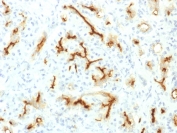
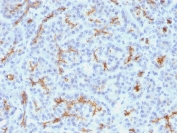
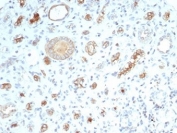
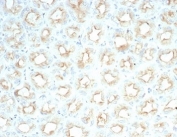
Immunohistochemistry is widely used to visualize CFTR expression within intact tissue architecture. CFTR typically shows apical membranous staining in epithelial cells, particularly in ductal and glandular structures such as pancreas, salivary gland, and kidney. A CFTR antibody for immunohistochemistry allows clear localization of CFTR within epithelial compartments, while a mouse tissue reactive CFTR antibody supports detection in both mouse and human tissues, enabling direct comparison between experimental models and human samples.
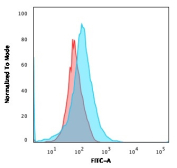
Flow cytometry enables quantitative detection of CFTR at the single-cell level, allowing identification of CFTR-positive populations and analysis of expression heterogeneity. A CFTR antibody for flow cytometry is particularly useful in cell line studies, including leukemia-derived and epithelial models, where CFTR expression may vary across subpopulations and requires precise gating for accurate analysis.
Western blot analysis is commonly used to detect CFTR protein and assess expression levels across tissues and experimental conditions. CFTR typically appears as a high molecular weight protein due to glycosylation and complex domain structure, and may show multiple bands depending on processing and maturation state. Western blotting provides a complementary approach to tissue-based and single-cell assays, supporting confirmation of CFTR expression and evaluation of protein integrity in experimental samples.
Selection of a CFTR antibody depends on application, species compatibility, and experimental system. Antibodies optimized for immunohistochemistry provide spatial context within tissues, while flow cytometry-compatible antibodies enable quantitative analysis of cell populations. Antibodies that demonstrate performance in both mouse and human tissues are particularly valuable for translational research, allowing continuity between in vivo models and human biology.
Researchers studying epithelial ion transport, chloride channel regulation, and membrane trafficking pathways may also be interested in our Cell Biology Antibodies landing page featuring transport proteins, membrane associated markers, and intracellular signaling related targets.
Researchers investigating mucosal immunity, inflammatory airway disease, and epithelial barrier regulation may also be interested in our Immunology Antibodies landing page featuring cytokines, immune regulators, and host defense related proteins.
A selection of CFTR antibody products is shown below to support a range of research applications.
These CFTR antibodies are part of a broader antibody panel offered by NSJ Bioreagents.
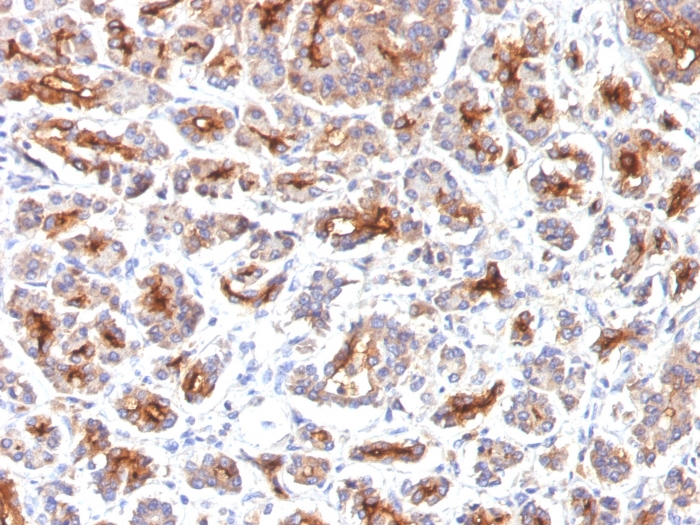
CFTR Antibody Pancreas IHC. Immunohistochemistry analysis of Cystic fibrosis transmembrane conductance regulator / CFTR expression in FFPE human pancreas tissue using CFTR antibody clone SPM176. HRP-DAB brown staining is observed with apical membranous and luminal accentuation in ductal epithelial cells, while surrounding acinar tissue shows comparatively reduced signal; nuclei are counterstained blue. The staining pattern is consistent with polarized epithelial localization of CFTR in pancreatic duct structures.


 Powered by Bioz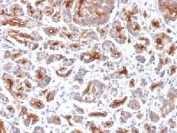







 info@nsjbio.com