- Tel: 858.663.9055
 Email: info@nsjbio.com
- Tel: 858.663.9055
- Email: info@nsjbio.com
Email: info@nsjbio.com
Stem cell marker antibodies are widely used to investigate pluripotency, self-renewal capacity, lineage commitment, and progenitor cell biology across developmental, regenerative, and cancer research applications. Stem Cell Marker Antibodies support detection of proteins associated with embryonic stem cells, adult tissue stem cells, induced pluripotent stem cells, and cancer stem cell populations. These markers are commonly analyzed by immunohistochemistry, immunofluorescence, flow cytometry, and western blotting to characterize stemness-associated signaling pathways and differentiation states.
Stem cell populations are regulated through coordinated transcriptional, epigenetic, and signaling mechanisms that maintain proliferative potential while suppressing terminal differentiation programs. Many commonly studied stemness markers function within chromatin remodeling complexes, transcription factor networks, or cell surface signaling pathways controlling tissue regeneration and developmental plasticity. Dysregulation of these pathways is also strongly associated with tumor initiation, therapeutic resistance, epithelial-mesenchymal transition, and cancer stem cell maintenance.
Several proteins are routinely used as stem cell and progenitor markers across developmental biology and oncology research:
These markers are often studied together to evaluate proliferative hierarchy, lineage plasticity, tumor heterogeneity, and regenerative capacity in normal and malignant tissue.
Cancer stem cell-associated proteins have become important biomarkers in studies of tumor progression, metastasis, and therapeutic resistance. Many tumors contain subpopulations of cells displaying stemness-associated phenotypes characterized by enhanced self-renewal, resistance to apoptosis, and increased invasive capacity. Stem cell marker antibodies are therefore commonly used to investigate aggressive tumor compartments in breast cancer, colorectal cancer, glioblastoma, leukemia, prostate cancer, pancreatic cancer, and additional malignancies.
Proteins such as BMI1, SOX2, NANOG, CD44, and CD133 are frequently linked to poor prognosis and treatment resistance due to their roles in maintaining stem-like cellular states. Epigenetic regulators and chromatin-associated proteins also contribute to transcriptional plasticity and adaptation to cellular stress within tumor microenvironments.
Stem Cell Marker Antibodies are commonly used for:
Nuclear transcription factors, chromatin remodeling proteins, and cell surface stemness markers are frequently evaluated together to investigate differentiation status and lineage commitment across multiple experimental systems.
Epigenetic regulatory proteins are increasingly recognized as major contributors to stem cell maintenance and tumor plasticity. Polycomb group proteins such as BMI1 help maintain transcriptional repression programs that preserve self-renewal capacity and suppress differentiation-associated genes. These chromatin-associated factors interact with histone modification machinery and transcriptional regulators to stabilize stem-like cellular states.
Antibodies targeting polycomb proteins, pluripotency transcription factors, and chromatin remodeling complexes are therefore important tools for studies examining stemness-associated epigenetic regulation and developmental signaling networks.
A selection of Stem Cell Marker Antibodies products is shown below to support a range of research applications.
Researchers studying stem cell maintenance, progenitor cell biology, and cellular differentiation pathways may also be interested in our Cell Biology Antibodies landing page featuring transcription factors, intracellular regulators, and signaling proteins involved in cell fate determination and tissue development.
These antibodies are part of a broader antibody panel offered by NSJ Bioreagents.
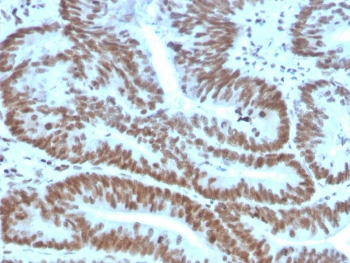
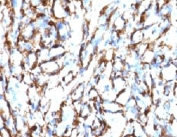
BMI1 Antibody Stem Cell Marker IHC. Immunohistochemistry analysis of FFPE human colon carcinoma tissue using BMI1 antibody clone BMI1/2823. Tumor epithelial cell nuclei demonstrate strong HRP-DAB brown staining consistent with the chromatin-associated localization of BMI1 in polycomb-mediated transcriptional repression, stem cell self-renewal signaling, and epigenetic regulation pathways associated with proliferative cancer stem cell phenotypes in colorectal carcinoma tissue. Nuclei are counterstained blue. Heat-induced epitope retrieval was performed by boiling tissue sections in pH9 10 mM Tris with 1 mM EDTA for 20 minutes followed by cooling prior to staining.
| ||

|

| ||
|
|


 Powered by Bioz


 Citations (4)


 info@nsjbio.com