- Tel: 858.663.9055
 Email: info@nsjbio.com
- Tel: 858.663.9055
- Email: info@nsjbio.com
Email: info@nsjbio.com
Epigenetics Antibodies target the proteins, enzymes, and modifications that control gene expression without altering the underlying DNA sequence. Epigenetic mechanisms—including DNA methylation, histone acetylation, histone methylation, chromatin remodeling, and non-coding RNA regulation—determine when and how genes are turned on or off. These processes are vital for embryonic development, cellular differentiation, tissue maintenance, and adaptive responses to environmental cues.
Disruption of epigenetic regulation is linked to a wide range of diseases. Aberrant DNA methylation is a hallmark of cancer, histone modification imbalances contribute to neurodegenerative and psychiatric disorders, and immune dysregulation is increasingly tied to epigenetic misregulation. By employing Epigenetics Antibodies, scientists can study the proteins and modifications that maintain or disrupt normal gene regulation. Because epigenetic states are dynamic and reversible, they also present compelling targets for new therapies, making Epigenetics Antibodies critical for both discovery and translational research.
NSJ Bioreagents provides a broad range of Epigenetics Antibodies validated for chromatin immunoprecipitation (ChIP), immunohistochemistry, immunofluorescence, western blotting, and ELISA. Each Epigenetics Antibody undergoes rigorous testing to ensure high specificity, minimal cross-reactivity, and reproducibility across multiple applications.
By choosing Epigenetics Antibodies from NSJ Bioreagents, researchers gain reagents optimized for consistency and accuracy. Our antibodies detect key regulators such as DNA methyltransferases, histone acetyltransferases, histone deacetylases, and specific histone modifications including H3K4me3, H3K9me2, H3K27ac, and H3K27me3. Each product is accompanied by detailed datasheets, recommended controls, and validated protocols, providing the support needed to generate reliable, interpretable data.
The Epigenetics Antibodies collection is used in a wide variety of research contexts, spanning basic biology to clinical medicine.
Epigenetics Antibodies detect histone modifications associated with transcriptional activation or repression.
These reagents clarify how nucleosomes are remodeled and repositioned to regulate accessibility.
Epigenetics Antibodies support genome-wide mapping of chromatin states in development and differentiation.
Epigenetics Antibodies reveal aberrant methylation patterns and histone modifications in tumors.
They support biomarker discovery for cancer prognosis and therapy response.
Epigenetics Antibodies validate therapeutic targets for epigenetic drugs such as HDAC inhibitors, BET inhibitors, and DNMT inhibitors.
Epigenetics Antibodies clarify chromatin changes in learning, memory, and neuronal plasticity.
They support studies of neurodevelopmental disorders including Rett syndrome and fragile X.
Epigenetics Antibodies are applied in models of Alzheimer’s, Parkinson’s, and Huntington’s disease.
Epigenetics Antibodies identify epigenetic regulators in T cell and B cell differentiation.
They support studies of how chromatin states shape innate immune responses.
Epigenetics Antibodies are applied in autoimmune disease research, including lupus and rheumatoid arthritis.
Epigenetics Antibodies validate pluripotency-associated chromatin states.
They ensure accurate monitoring of lineage specification during stem cell differentiation.
Epigenetics Antibodies support regenerative therapies by confirming correct epigenetic programming.
Epigenetics Antibodies highlight how diet, toxins, or stress affect chromatin states.
They provide tools for studying transgenerational epigenetic inheritance.
Epigenetics Antibodies are applied in validating biomarkers for cancer, metabolic disease, and neurodegeneration.
They are used to stratify patients for clinical trials involving epigenetic therapies.
Epigenetics Antibodies provide confidence that therapeutic modulation of epigenetic regulators achieves the intended effect.
Epigenetic control sits at the intersection of genetics, environment, and disease. The Epigenetics Antibodies portfolio allows scientists to probe this interface with precision.
In basic science, Epigenetics Antibodies reveal how chromatin organization influences transcriptional programs. In oncology, they help uncover aberrant methylation and acetylation patterns that drive cancer initiation and progression. In neuroscience, Epigenetics Antibodies support discoveries linking chromatin remodeling to cognition, plasticity, and psychiatric disease. In immunology, they provide insight into how epigenetic regulation directs immune cell development and autoimmunity.
Clinically, epigenetic markers are moving into diagnostics and personalized medicine. Epigenetics Antibodies are integral to biomarker discovery, patient monitoring, and therapeutic development. Because epigenetic states are reversible, the ability to detect them accurately with Epigenetics Antibodies directly supports development of new drugs and treatment strategies.
Epigenetics regulates cellular identity and health by controlling when and how genes are expressed. The Epigenetics Antibodies portfolio equips researchers and clinicians with trusted reagents for detecting DNA methylation, histone modifications, and chromatin regulators. By combining rigorous validation with broad applicability, these antibodies remain indispensable for advancing discovery biology, oncology, neuroscience, immunology, and translational medicine. Their role in diagnostics and therapeutic development ensures that Epigenetics Antibodies will remain at the center of biomedical innovation.
These antibodies are part of a broader antibody panel offered by NSJ Bioreagents.

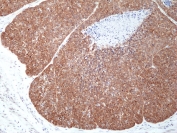
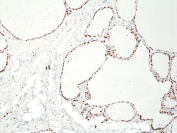
IHC staining of FFPE human bladder carcinoma with EZH2 / Enhancer of zeste homolog 2 antibody (clone EZH2/6988, cat # V5233). HIER: boil tissue sections in pH 9 10mM Tris with 1mM EDTA for 20 min and allow to cool before testing.




 Powered by Bioz



 info@nsjbio.com