- Tel: 858.663.9055
 Email: info@nsjbio.com
- Tel: 858.663.9055
- Email: info@nsjbio.com
Email: info@nsjbio.com
CD1 molecule alpha 1 (CD1A) is a transmembrane glycoprotein that plays a central role in lipid antigen presentation and is widely recognized as a marker of dendritic cells, particularly Langerhans cells in epithelial tissues. CD1A Antibody products enable detection of CD1a protein across a range of experimental systems, supporting studies of immune cell identification, antigen presentation, and tissue-specific immune responses.
CD1a expression is largely restricted to antigen-presenting cells, including dendritic cells in the skin, mucosal tissues, and thymic cortex. This selective expression pattern makes CD1A antibodies valuable tools for identifying immune cell populations, analyzing tissue-resident dendritic cells, and evaluating immune system activity in both normal and disease contexts.
CD1A is a member of the CD1 family of antigen-presenting molecules and is specialized for presenting lipid and glycolipid antigens to T cells. Unlike classical MHC molecules, which present peptide antigens, CD1A binds hydrophobic antigens derived from microbial pathogens, environmental sources, and endogenous lipid metabolism. This unique function allows CD1A-expressing cells to participate in immune responses that extend beyond peptide antigen recognition.
CD1a-positive dendritic cells are strategically located at barrier surfaces, including the skin and mucosal epithelia, where they capture antigens and initiate immune responses. These cells play a key role in linking innate and adaptive immunity by activating T cells and shaping immune responses based on antigen exposure and local environmental signals.
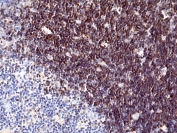
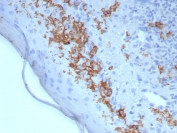
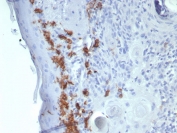
CD1A antibodies are widely used in immunohistochemistry to visualize dendritic cells within tissue architecture. In FFPE samples, CD1a staining is typically observed as membranous and cytoplasmic signal in Langerhans cells and other dendritic populations, with minimal staining in surrounding epithelial or stromal cells. IHC applications are particularly valuable for evaluating tissue distribution, immune cell infiltration, and epithelial immune surveillance.
In western blot analysis, CD1A antibodies enable detection of CD1a protein in cell and tissue lysates. The predicted molecular weight of CD1A is approximately 37-49 kDa, with possible variation due to glycosylation. WB applications support studies of protein expression, validation of target specificity, and analysis of post-translational modification patterns.
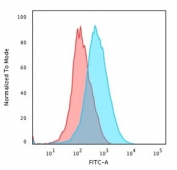
CD1A antibodies are commonly used in flow cytometry for identifying CD1a-positive immune cell populations. As a surface marker, CD1a enables clear discrimination of dendritic cell subsets and supports immune phenotyping, population analysis, and cell sorting applications in suspension-based assays.
CD1A is most prominently expressed in Langerhans cells within the epidermis and in dendritic cells located in mucosal and lymphoid tissues. In skin, CD1a-positive cells form a network of antigen-presenting cells that monitor environmental exposure and contribute to immune surveillance. In the thymus, CD1A expression marks cortical thymocytes involved in T-cell development.
This distribution makes CD1A antibodies essential tools for studying dendritic cell biology, immune surveillance at barrier surfaces, and the development and function of antigen-presenting cells. CD1a detection also supports evaluation of immune cell populations in inflammatory conditions, infection, and tumor-associated immune responses.
CD1A antibodies are used in a wide range of research areas, including:
CD Antibody products provide reliable detection of CD molecules across multiple applications, supporting studies of antigen-presenting cells, immune surveillance, and T-cell activation. With strong expression in dendritic cells and Langerhans cells, CD1A antibodies are essential tools for investigating immune cell distribution, function, and regulation in both normal physiology and disease.
Researchers investigating adaptive immune activation, leukocyte signaling networks, and inflammatory response mechanisms may also be interested in our Immunology Antibodies landing page featuring cytokines, immune regulators, and host defense related proteins.
Browse the complete collection of research antibodies on our Antibodies landing page.
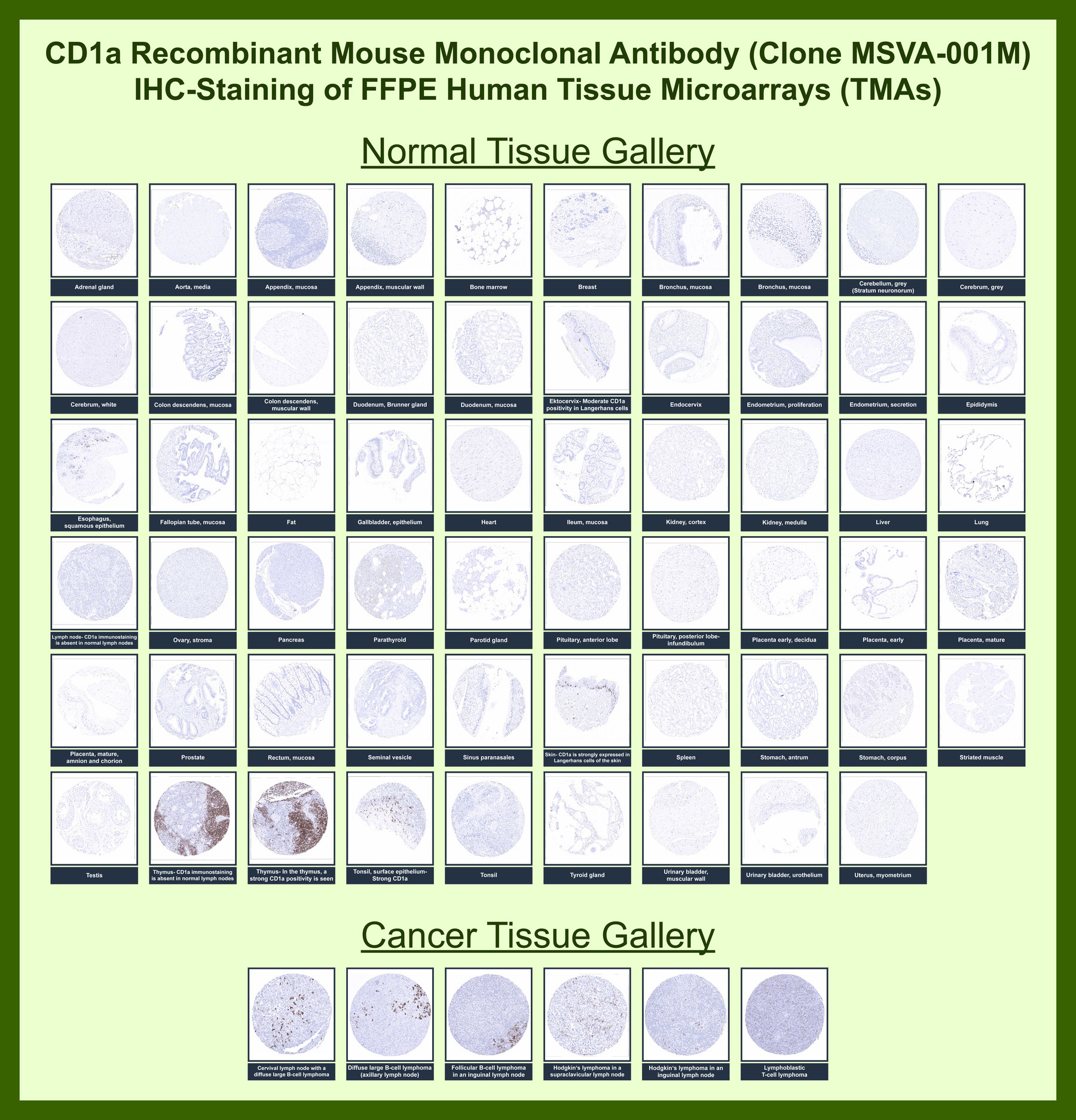
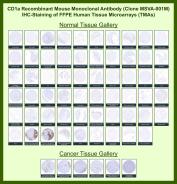
CD1A Antibody. Immunohistochemistry analysis of CD1A / CD1a expression in human tissue microarray (TMA) containing multiple normal and cancer tissues using CD1A Antibody (Cat # V6138). Membranous and cytoplasmic staining is observed in dendritic cells, with strong signal in Langerhans cells of epithelial tissues, while most non-immune cell types remain negative. The staining pattern highlights tissue-resident antigen-presenting cells and supports evaluation of immune cell distribution across diverse tissue types.


 Powered by Bioz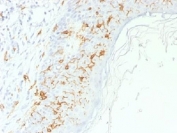






 info@nsjbio.com