- Tel: 858.663.9055
 Email: info@nsjbio.com
- Tel: 858.663.9055
- Email: info@nsjbio.com
Email: info@nsjbio.com
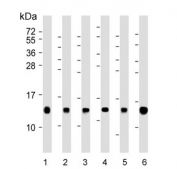
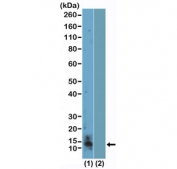
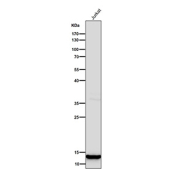
Histone H4 antibodies for chromatin and epigenetics research are essential tools for studying nucleosome structure, chromatin organization, and genome stability. Histone H4 (HIST1H4) is a highly conserved core histone protein that plays a central role in nucleosome assembly and chromatin compaction. This collection of Histone H4 antibodies provides a centralized resource for detecting total H4 protein as well as modification-specific chromatin states associated with structural regulation and epigenetic control.
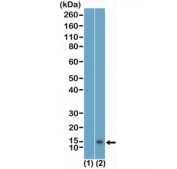
Histone H4 is subject to a distinct set of post-translational modifications that regulate chromatin architecture and cellular processes. Among these, lysine 20 methylation represents one of the most important regulatory axes in chromatin biology. Targeted reagents such as H4K20me1 antibody enable investigation of chromatin compaction and DNA replication, while other methylation states contribute to DNA repair and heterochromatin formation. These Histone H4 antibodies support detailed analysis of chromatin structure and genome integrity.
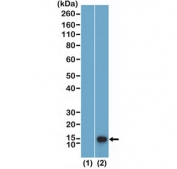
In addition to lysine methylation, arginine methylation at residue 3 provides another critical layer of epigenetic regulation. Symmetric dimethylation of histone H4 at arginine 3 is associated with transcriptional repression and PRMT5-mediated chromatin silencing. Detection using H4R3me2s antibody allows investigation of repressive chromatin states and regulatory pathways controlling gene expression and cellular identity.
Histone H4 plays a key role in nucleosome stability and higher-order chromatin organization. Unlike histone modifications primarily associated with transcriptional activation, many H4 modifications regulate chromatin compaction, replication timing, and genome maintenance. These properties make Histone H4 antibodies particularly valuable for studying structural chromatin biology and epigenetic regulation beyond transcription alone.
Histone H4 antibodies are used to detect core histone proteins and regulatory modifications, including:
These targets support investigation of chromatin architecture, genome stability, and epigenetic regulation across diverse biological systems.
Researchers studying chromatin compaction, epigenetic modification pathways, and nucleosome associated regulatory signaling may also be interested in our Cell Biology Antibodies landing page featuring nuclear markers, intracellular regulators, and signaling related targets.
These Histone H4 antibodies are widely used to investigate chromatin organization, structural regulation of nucleosomes, and epigenetic mechanisms controlling genome stability, providing essential tools for studying replication, chromatin compaction, and gene regulation. They are part of a broader antibody panel offered by NSJ Bioreagents.

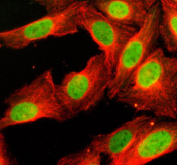
Histone H4 Antibodies. Immunofluorescence analysis of Histone H4 in human cells using a Histone H4 antibody demonstrates strong nuclear staining consistent with chromatin-associated localization. Nuclear signal reflects distribution of Histone H4 within nucleosomes, supporting its role in chromatin compaction, genome stability, and epigenetic regulation, while cytoplasmic structures provide morphological context.
| ||

|




 Powered by Bioz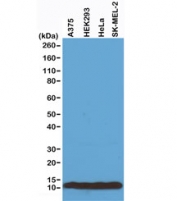

 info@nsjbio.com