- Tel: 858.663.9055
 Email: info@nsjbio.com
- Tel: 858.663.9055
- Email: info@nsjbio.com
Email: info@nsjbio.com
Skeletal Muscle Antibodies are valuable tools for investigating muscle development, contractile function, tissue organization, and neuromuscular biology. Skeletal muscle is composed of highly specialized multinucleated fibers that generate force through coordinated interactions between contractile proteins organized into repeating sarcomere units. Antibodies directed against skeletal muscle markers help researchers identify muscle cell populations and investigate the molecular mechanisms that regulate muscle structure, growth, regeneration, and function.
Skeletal muscle remains one of the most extensively studied tissues in physiology, developmental biology, metabolism, and disease research. As a result, skeletal muscle antibodies support a broad range of investigations involving muscle fiber composition, cellular differentiation, and tissue-specific protein expression.
The contractile properties of skeletal muscle depend on highly organized myofibrils composed of actin, myosin, alpha actinin, troponin, tropomyosin, and associated structural proteins. These proteins assemble into sarcomeres, which represent the fundamental contractile units of striated muscle.
Muscle fibers are supported by specialized cytoskeletal networks that maintain cellular architecture and transmit force throughout the tissue. Antibodies directed against sarcomeric and cytoskeletal proteins allow researchers to visualize muscle organization and study mechanisms that regulate contractility, structural integrity, and adaptation to physiologic demands.
Frequently studied skeletal muscle-associated proteins include:
These markers support studies of muscle differentiation, sarcomere assembly, contractile regulation, and muscle fiber maturation.
Skeletal muscle possesses a remarkable capacity for adaptation and repair. Muscle stem cells and progenitor populations contribute to tissue regeneration following injury and participate in the maintenance of muscle integrity throughout life.
Researchers frequently utilize skeletal muscle antibodies to investigate developmental pathways that regulate myogenesis, cellular differentiation, and tissue remodeling. These studies help improve understanding of muscle growth, regeneration, and the molecular mechanisms that govern skeletal muscle homeostasis.
Alterations in skeletal muscle structure and protein expression contribute to numerous neuromuscular and metabolic disorders. Changes in sarcomeric organization, cytoskeletal stability, and cellular signaling pathways can affect muscle function and tissue integrity.
Skeletal muscle antibodies support investigations into muscle degeneration, muscular dystrophy, neuromuscular disease, metabolic adaptation, aging-related muscle changes, and exercise-associated physiologic responses. These reagents enable detailed examination of proteins involved in muscle maintenance and disease-associated biological processes.
Skeletal Muscle Antibodies are commonly used for:
These antibodies support studies of both normal skeletal muscle physiology and disease-associated changes in muscle tissue.
The Skeletal Muscle Antibody collection includes antibodies directed against proteins involved in sarcomere assembly, cytoskeletal organization, contractile regulation, cellular differentiation, and muscle-specific biological pathways. These reagents support investigations into muscle development, tissue organization, regeneration, and disease-associated molecular mechanisms.
Researchers studying muscle contractility, sarcomere organization pathways, and cardiovascular muscle biology may also be interested in our Cardiovascular Antibodies landing page featuring contractile proteins, signaling mediators, and cardiovascular disease related targets.
Browse the complete collection of research antibodies on our Antibodies landing page.

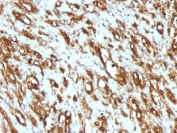
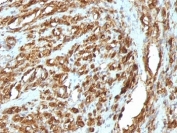
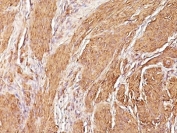
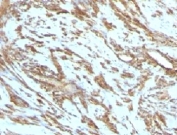
Sarcomeric Alpha Actinin Antibody Skeletal Muscle Fiber IHC. Immunohistochemistry analysis of FFPE human skeletal muscle tissue using Sarcomeric Alpha Actinin Antibody clone ACTN2/3292 demonstrates strong HRP-DAB brown staining throughout elongated striated muscle fibers. The staining pattern highlights the highly organized contractile architecture of skeletal muscle and is consistent with the established localization of Alpha Actinin 2 (ACTN2), a key Z-disc protein responsible for actin filament anchoring and sarcomere organization. This image illustrates the orderly arrangement of the skeletal muscle contractile apparatus and supports studies of muscle differentiation, sarcomere assembly, and striated muscle biology. HIER: boil tissue sections in pH6, 10mM citrate buffer, for 10-20 min and allow to cool before testing.


 Powered by Bioz


 Citations (6)
 info@nsjbio.com