- Tel: 858.663.9055
 Email: info@nsjbio.com
- Tel: 858.663.9055
- Email: info@nsjbio.com
Email: info@nsjbio.com
CD8 alpha (CD8A) is a transmembrane glycoprotein that functions as a co-receptor for the T cell receptor (TCR) and plays a central role in antigen recognition by cytotoxic T lymphocytes. Expressed primarily on CD8+ T cells, CD8A binds to major histocompatibility complex class I (MHC I) molecules and enhances TCR signaling during immune surveillance and cytotoxic responses. Because of its highly specific expression pattern on cytotoxic T cells, CD8A is widely used as a marker for identifying and characterizing T cell populations in both normal immune tissues and tumor microenvironments.
CD8A antibody reagents are essential tools for studying adaptive immunity, immune infiltration, and T cell-mediated cytotoxicity across a range of experimental platforms. CD8 alpha antibody detection enables precise visualization of cytotoxic T lymphocytes in tissue sections, quantification of immune cell populations by flow cytometry, and protein expression analysis by western blot and immunofluorescence. These capabilities make CD8A antibodies indispensable in immunology, oncology, and translational research and an important part of our CD Antibody collection.
CD8A encodes the alpha chain of the CD8 receptor, which typically forms a heterodimer with the CD8 beta chain (CD8B) on the surface of cytotoxic T cells. In some contexts, CD8A can also form homodimers, particularly in certain immune cell subsets. The CD8 receptor interacts with MHC class I molecules presented on nearly all nucleated cells, enabling cytotoxic T cells to recognize and respond to intracellular antigens such as viral peptides or tumor-associated antigens.
Upon antigen recognition, CD8A contributes to the stabilization of the TCR-MHC interaction and recruits intracellular signaling molecules that amplify T cell activation. This leads to clonal expansion, cytokine production, and targeted killing of infected or malignant cells. Because of this central role, CD8A is closely associated with immune surveillance, tumor immunity, and response to immunotherapy.
In addition to its role in conventional CD8+ T cells, CD8A expression has been observed in subsets of dendritic cells and natural killer-like populations under certain conditions, further expanding its relevance in immune regulation and antigen presentation contexts.
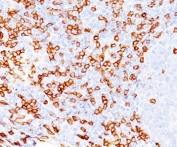
CD8A antibodies are widely used in immunohistochemistry to evaluate the distribution and density of cytotoxic T cells within tissue sections. In formalin-fixed, paraffin-embedded (FFPE) tissues, CD8A staining highlights membranous labeling of infiltrating lymphocytes, making it a critical marker for assessing immune infiltration in tumors.
In oncology research and pathology, CD8A IHC is frequently used to characterize tumor-infiltrating lymphocytes (TILs), which are associated with prognosis and response to immunotherapies such as checkpoint inhibitors. High CD8+ T cell density is often correlated with improved clinical outcomes in multiple cancer types.
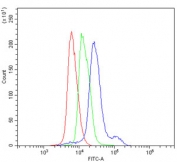
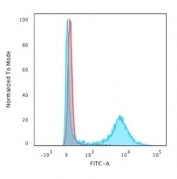
CD8A antibodies are essential for flow cytometry-based immunophenotyping of immune cell populations. In FACS analysis, CD8A is used alongside markers such as CD3, CD4, and CD45 to define T cell subsets and evaluate immune composition in blood, lymphoid organs, and experimental models.
CD8A FACS antibodies enable precise quantification of cytotoxic T cells and are commonly used in studies of immune activation, vaccine response, infection, and immunotherapy monitoring. Detection of CD8 expression is typically observed as strong cell surface staining in viable or fixed cell populations.
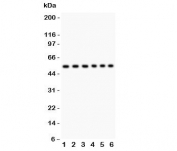
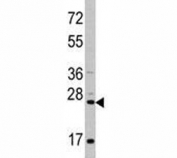
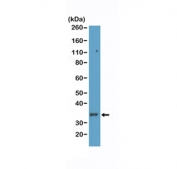
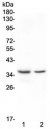
CD8A antibodies are used in western blot analysis to confirm protein expression in cell lysates and tissue extracts. As a membrane-associated glycoprotein, CD8A may appear as a band corresponding to its expected molecular weight, with potential variation depending on glycosylation status.
Western blot detection of CD8A is useful for validating expression in engineered cell lines, immune cell populations, or experimental conditions where protein-level confirmation is required.
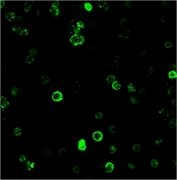
CD8A antibodies are also used in immunofluorescence to visualize the spatial distribution of cytotoxic T cells within tissues or cell preparations. Fluorescent labeling enables co-localization studies with other immune markers and provides high-resolution insight into immune cell positioning within microenvironments.
In tumor biology, CD8A IF staining is frequently used to examine the proximity of cytotoxic T cells to tumor cells, stromal compartments, or vasculature, supporting studies of immune exclusion or infiltration.
CD8A antibodies are commonly used in combination with other immune markers to define cell populations and functional states. These include:
Together, these markers enable comprehensive characterization of immune landscapes in both research and clinical settings.
Researchers studying cytotoxic T-cell biology, antigen specific immune responses, and lymphocyte mediated signaling pathways may also be interested in our CD Antibodies landing page featuring cluster of differentiation markers broadly used in immunology and cellular immune research.
Researchers exploring adaptive immune regulation, T-cell activation networks, and inflammatory response signaling may also be interested in our Immunology Antibodies landing page featuring cytokines, immune receptors, and host defense related proteins.
Browse the complete collection of research antibodies on our Antibodies landing page.
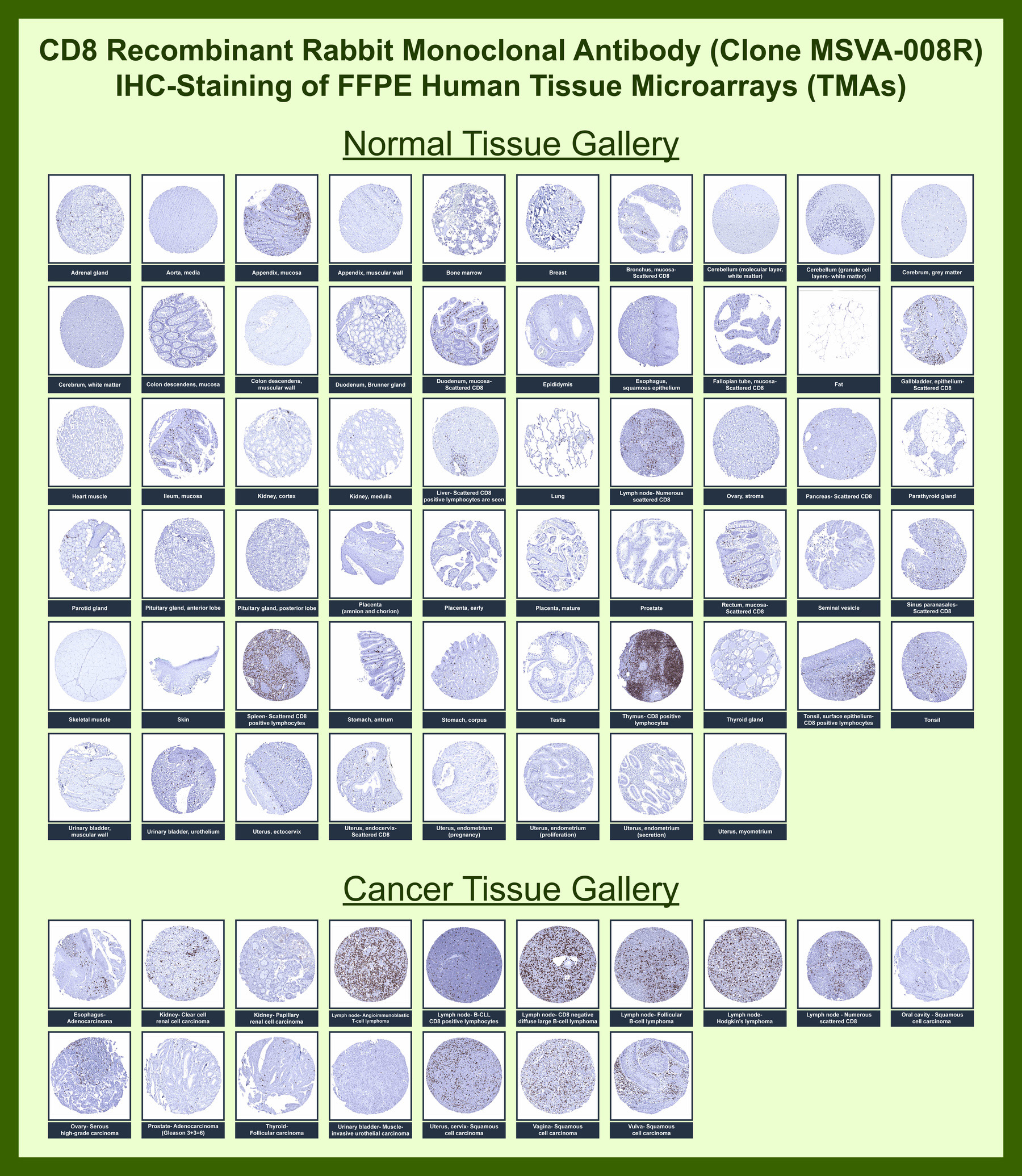
CD8A Antibody IHC TMA Analysis. Immunohistochemistry analysis of CD8 alpha (CD8A) in human tissue microarray (TMA) panels showing strong membranous staining of cytotoxic T lymphocytes across normal and cancer tissues.




 Powered by Bioz



 Citations (4)
 info@nsjbio.com