- Tel: 858.663.9055
 Email: info@nsjbio.com
- Tel: 858.663.9055
- Email: info@nsjbio.com
Email: info@nsjbio.com
CD4 molecule (CD4) is a cell surface glycoprotein primarily expressed on T helper lymphocytes, with additional expression on monocytes, macrophages, and dendritic cells. As a co-receptor for major histocompatibility complex class II molecules, CD4 plays a central role in antigen recognition and activation of adaptive immune responses. CD4 antibody reagents are widely used to detect and characterize CD4-positive immune cell populations across a range of experimental systems.
CD4 antibody, also known as T helper cell marker antibody or CD4 surface receptor antibody, is one of the most commonly used tools in immunology for identifying helper T cell populations. Because CD4 expression defines a major functional subset of lymphocytes, CD4 antibodies are essential for immune profiling, disease research, and monitoring of immune system dynamics.
CD4-positive T cells are critical regulators of immune responses, coordinating the activation of B cells, cytotoxic T cells, and innate immune populations through cytokine signaling and cell-cell interactions. The CD4 receptor enhances T cell receptor signaling and contributes to antigen-specific immune activation.
Alterations in CD4-positive cell populations are associated with a wide range of conditions, including infectious diseases, autoimmune disorders, and cancer. CD4 antibody-based detection is therefore widely used to study immune dysfunction, inflammation, and tumor immune microenvironments. In oncology, CD4-positive lymphocyte infiltration is frequently evaluated as part of immune profiling strategies in tumor tissues.
CD4 Antibody for FACS is a cornerstone of immune cell analysis, enabling precise identification and quantification of CD4-positive T helper cells within heterogeneous populations. In flow cytometry, CD4 antibodies support lymphocyte gating strategies and are commonly used to distinguish CD4-positive helper T cells from CD8-positive cytotoxic T cells. These assays are essential for immune monitoring, subset analysis, and functional immune studies.
CD4 Antibody for IHC is used to detect CD4-positive lymphocytes in tissue sections, providing spatial context for immune cell infiltration in normal and diseased tissues. In formalin-fixed paraffin-embedded samples, CD4 staining highlights T helper cells within lymphoid organs, inflamed tissues, and tumor microenvironments. This application is particularly valuable in pathology and translational research.
CD4 Antibody for WB enables detection of CD4 protein expression in cell lysates and tissue extracts. Western blot analysis is used to confirm CD4 expression levels and evaluate protein integrity in experimental systems. CD4 typically appears as a membrane-associated glycoprotein, and detection supports studies of immune cell biology and receptor expression.
Multiple CD4 antibody clones are available to support different research applications, including flow cytometry, immunohistochemistry, and protein analysis. Mouse monoclonal CD4 antibodies are widely used due to their specificity and consistent performance in detecting CD4-positive cells. Different clones may be optimized for specific applications such as FACS-based immune profiling or tissue-based detection in IHC.
Selecting the appropriate CD4 antibody depends on the intended application, sample type, and detection method. Researchers often choose clones based on performance in flow cytometry panels, staining characteristics in tissue sections, or compatibility with specific assay conditions.
NSJ Bioreagents offers a range of CD4 antibody products designed to support flow cytometry, immunohistochemistry, and western blot applications. These antibodies enable detection of CD4-positive immune cells and support studies of immune function, disease progression, and cellular signaling.
This antibody is part of our broader collection of immune marker antibodies designed for comprehensive immune cell analysis and profiling.
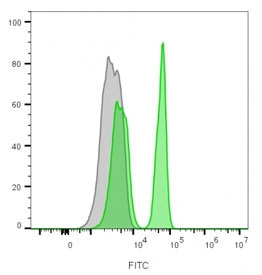
CD4 Antibody for FACS. Flow cytometry analysis of CD4 antibody staining in human peripheral blood mononuclear cells (PBMCs) demonstrating detection of CD4 molecule on T helper lymphocytes. Lymphocyte-gated cells show a distinct CD4-positive population (green) compared to the unstained control (gray), supporting flow cytometry-based identification of CD4-positive immune cell subsets.


 Powered by Bioz



 info@nsjbio.com