- Tel: 858.663.9055
 Email: info@nsjbio.com
- Tel: 858.663.9055
- Email: info@nsjbio.com
Email: info@nsjbio.com
Immunoglobulin antibodies are essential tools for detecting and quantifying antibody responses across a wide range of immunological and biochemical applications. These antibodies enable measurement of total immunoglobulin levels or subclass-specific detection, supporting studies of immune function, disease progression, and antibody production.
The major immunoglobulin classes - IgG, IgA, IgM, IgD, and IgE - each play distinct roles in the immune system. Antibodies targeting these classes are widely used in ELISA-based assays, where sensitivity, specificity, and subclass resolution are critical for accurate data interpretation.
Immunoglobulin antibodies are commonly used in ELISA assays for detection and quantification of circulating or secreted antibodies. ELISA-optimized antibodies support:
These applications are widely used in immunology research, antibody development, vaccine studies, and disease monitoring.
IgG is the most abundant immunoglobulin in circulation and plays a central role in systemic immune responses. IgG antibodies are commonly used to evaluate long-term immunity, antibody production, and immune memory. ELISA-based detection of IgG is widely used for quantification of antibody responses in serum and plasma samples.
IgA is a key mediator of immune protection at mucosal surfaces and is the dominant antibody class in secretions such as saliva, respiratory fluids, and gastrointestinal secretions. In addition to its presence in circulation, IgA plays a critical role in barrier immunity and host-microbiome interactions.
IgA antibodies are widely used in ELISA assays to measure immune responses at epithelial surfaces and in mucosal environments, where accurate detection of immunoglobulin alpha is essential.
IgA exists as two subclasses, IgA1 and IgA2, which differ in structure, distribution, and biological function. Understanding these differences is essential for accurate interpretation of immune responses.
IgA1 is predominantly found in circulation and is associated with systemic immune responses. Its extended hinge region provides flexibility for antigen binding but increases susceptibility to proteolytic cleavage.
IgA2 is enriched at mucosal surfaces and is structurally adapted for resistance to bacterial proteases, allowing it to function effectively in microbial-rich environments such as the gastrointestinal and respiratory tracts.
While IgA antibodies measure total immunoglobulin alpha, IgA1 and IgA2 antibodies provide subclass-specific resolution, enabling more precise analysis of systemic versus mucosal immune responses.
IgM is the first antibody produced during an immune response and serves as a key marker of early-stage immune activation. IgM antibodies are commonly used in ELISA assays to detect initial antibody responses and evaluate acute immune activity.
Immunoglobulin antibodies provide essential tools for studying immune responses across systemic and mucosal compartments. From total immunoglobulin detection to subclass-specific analysis, these antibodies enable detailed characterization of antibody production, immune status, and disease-related immune changes.
Researchers studying antibody mediated immunity, B-cell signaling pathways, and humoral immune regulation may also be interested in our Immunology Antibodies landing page featuring cytokines, immune markers, and host defense related proteins.
Browse the complete collection of research antibodies on our Antibodies landing page.
These antibodies are part of our immunoglobulin antibody collection, including IgA, IgA1, IgA2, IgG, and IgM antibodies optimized for ELISA-based detection and immunological research.
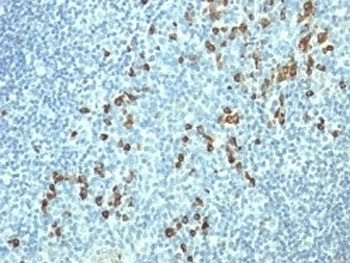
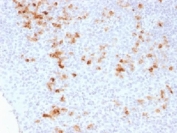
IHC staining of FFPE human tonsil tissue with Lambda Light Chain antibody (clone HP6054).


 Citations (1)
 Powered by Bioz






 info@nsjbio.com